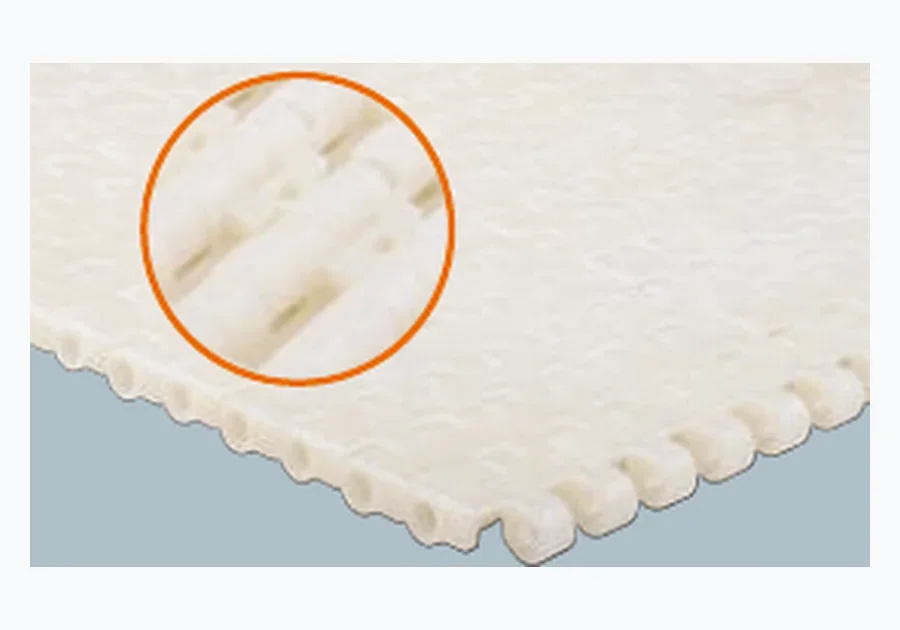
Modular Belts for Beverage Bottling & Packaging
Bottle, can, multipack and case conveyors need predictable support through wet zones, guide rails, accumulation and transfers between filling, labeling and packaging machines. The smallest container base is often a better design reference than the largest case on the line.
传送带在流程中的位置
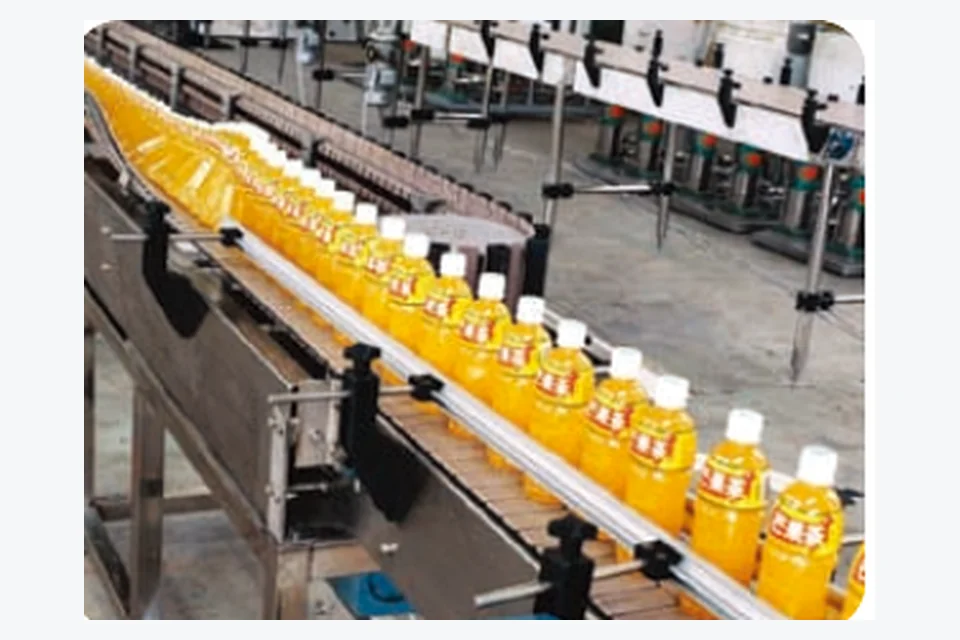
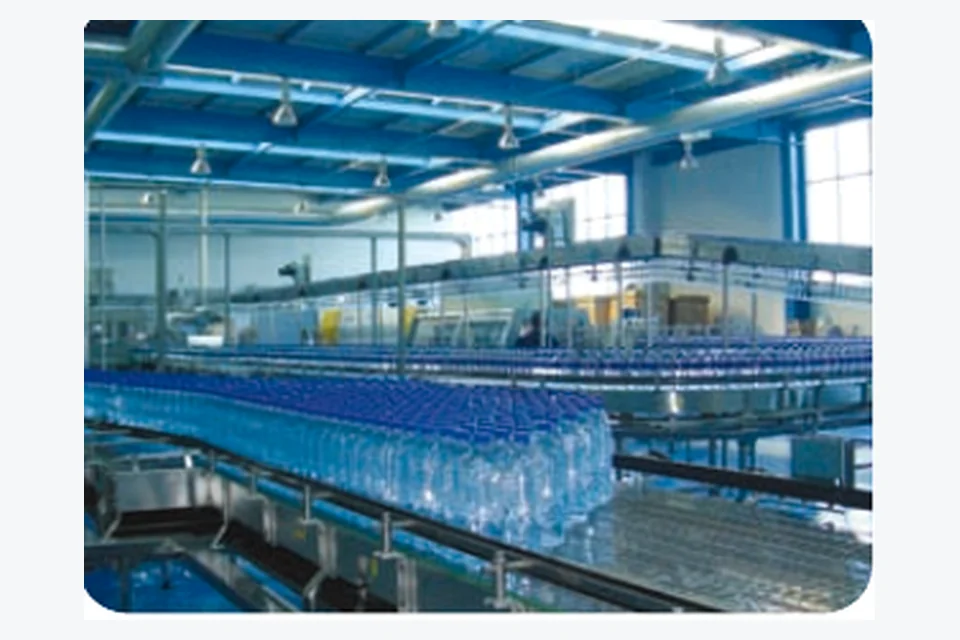
Separate process conveyors from packaging conveyors. Wet filling or rinsing zones can have different drainage needs from labeler discharge, case packing or palletizing transfer. A modular belt can support several of these tasks, but the useful face and guide arrangement can change by machine interface.
For Modular Belts for Beverage Bottling & Packaging, the conveyor should be described as a specific process position rather than only by a belt name. That gives a new-design or replacement RFQ enough context to distinguish support, opening, path and drive needs.
定义操作条件
| 输入 | 描述什么 |
|---|---|
| Container | Bottle, can, jar, multipack or case |
| Base footprint | Smallest stable contact area |
| Wet zones | Rinser/filler discharge or washdown |
| 积累 | Back pressure and product stability |
| Machine interface | Transfer plates, sensors, guides and lane changes |
| Speed/load | Line speed and expected accumulation load |
应避免的典型故障点
Containers can tip when transfer gaps are too large or the support pattern does not match the base. Wet product can carry liquid into labeling or packing zones. Mismatched sprockets can create tracking or engagement problems even when the belt width looks correct.
选择原则
For Modular Belts for Beverage Bottling & Packaging, solve product support, process opening, conveyor path and drive compatibility first. Material and project documentation can then be confirmed for the selected configuration.
平面、开放或弧形:选择逻辑
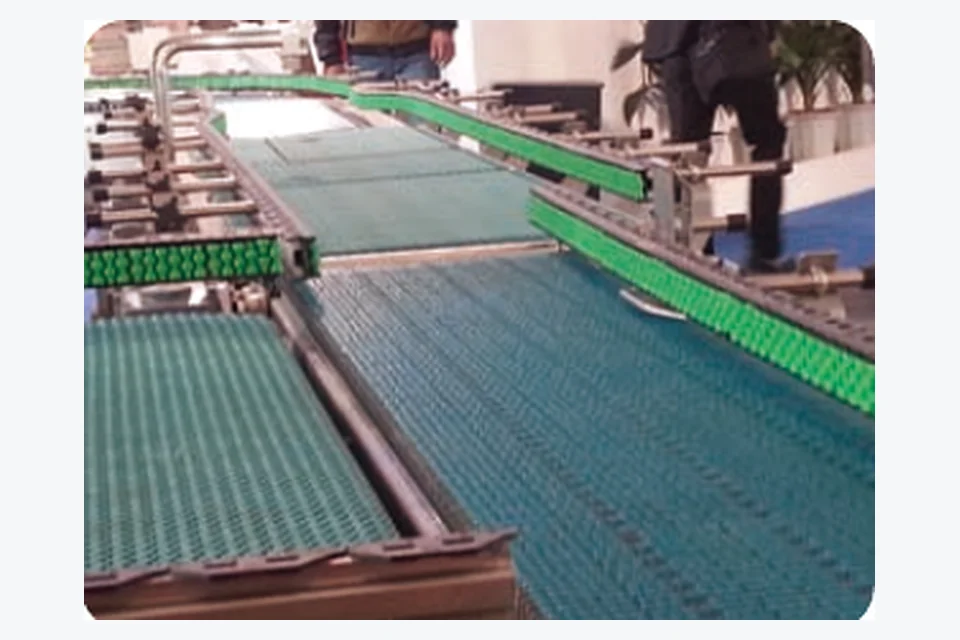
Flat surfaces are a practical first comparison for stable container support. Open or specialty faces can make sense in wet or process zones where drainage is useful. Curved layouts require radius geometry and guide details rather than a generic “bottling belt” request.
Pitch interacts with transfer size and underside engagement. Fine pitch may help at small containers or compact transfers, but the existing sprocket family must still be confirmed in retrofit work.
If drainage is required, choose opening based on the container base and liquid-release need. A percentage alone does not show whether a narrow bottle foot will sit securely on the actual grid pattern.
曲线几何形状的重要性
Curved bottle conveyors need stable guide support through the turn. Supply belt width, inside radius, curve angle, lane arrangement and drive location.
| 曲线输入 | 为什么这很重要 |
|---|---|
| 腰带宽度 | 半径能力与所选系列和宽度有关 |
| 内半径 | 定义转弯要求 |
| 曲率角 | 设置通过引导系统的总路径 |
| 向导简介 | 通过曲线控制位置和磨损 |
| 驾驶位置 | 改变传送带进入/离开曲线的方式 |
| 产品足迹 | 检查转弯时的稳定性和支撑力 |
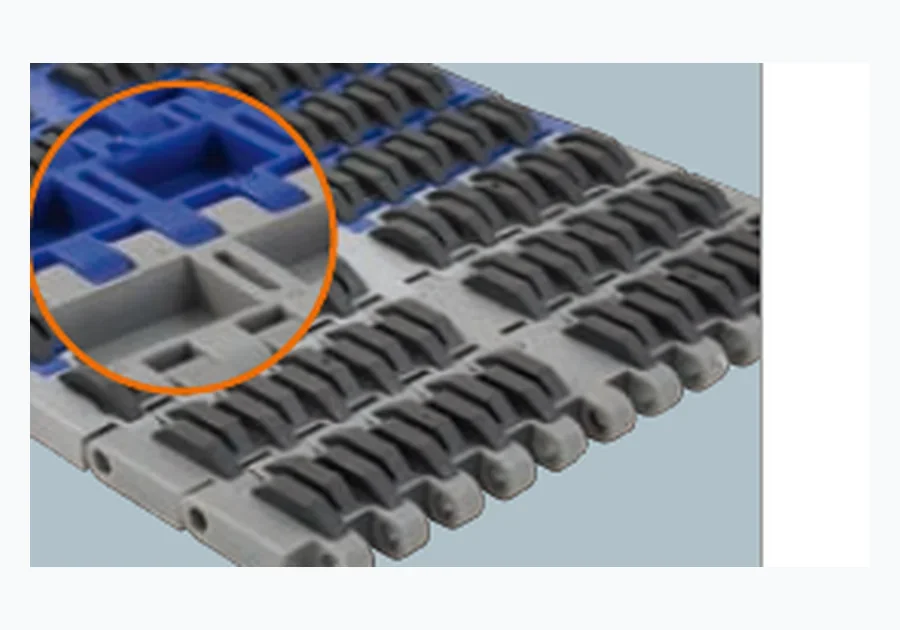

附件和输送机接口
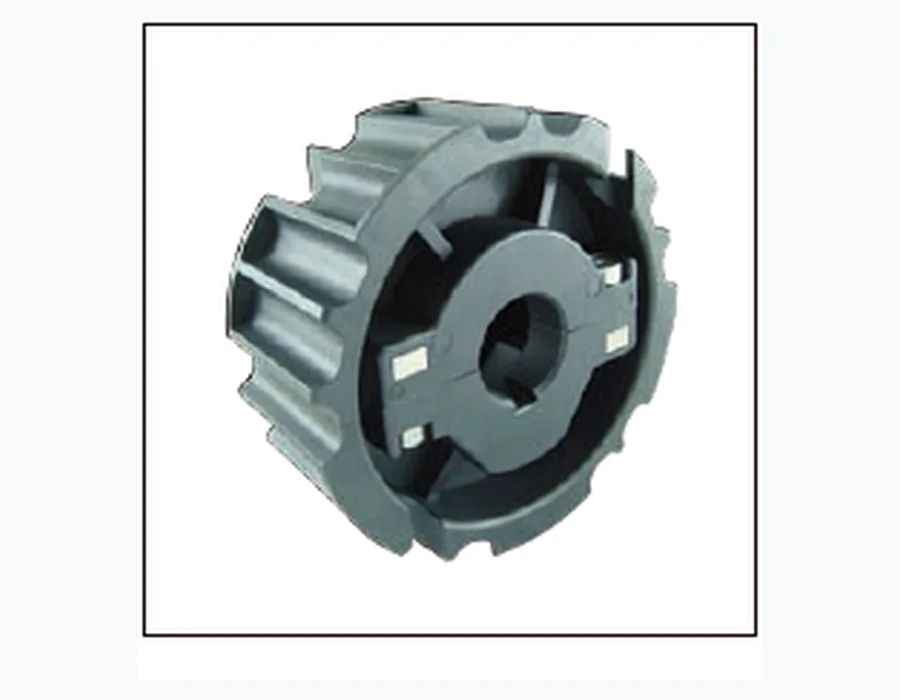
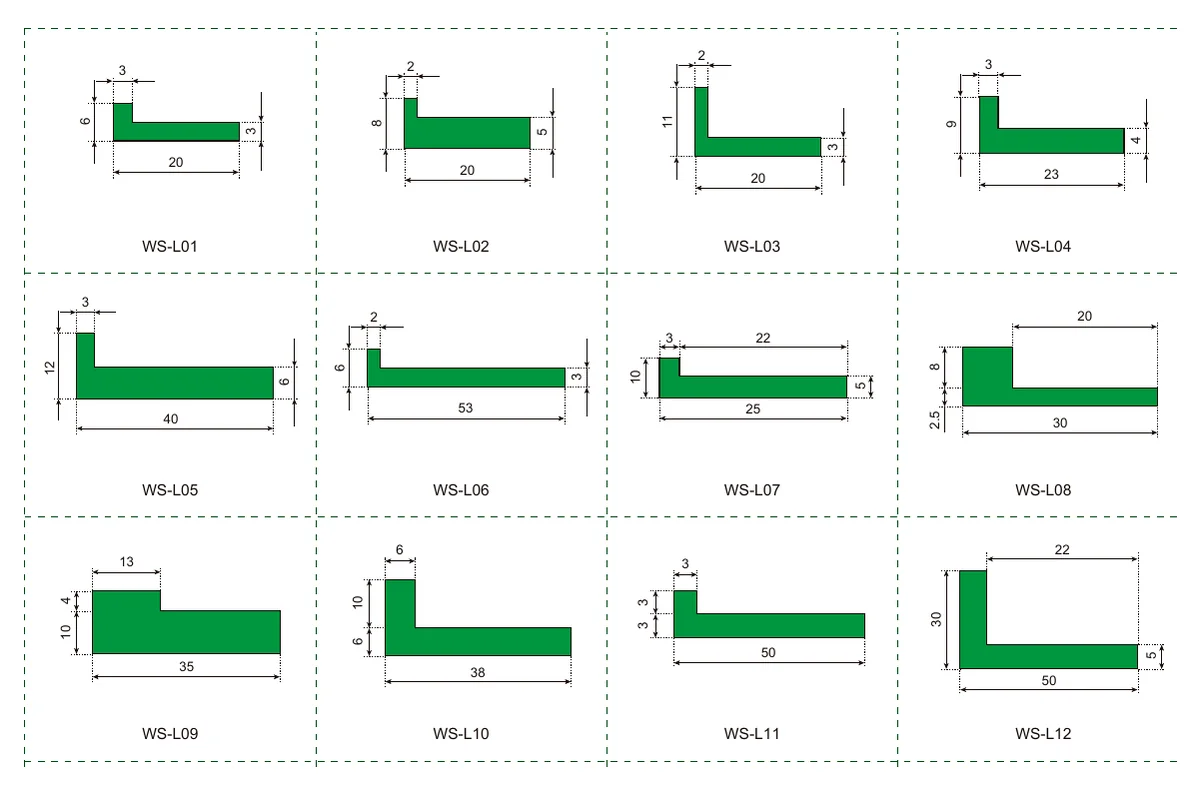
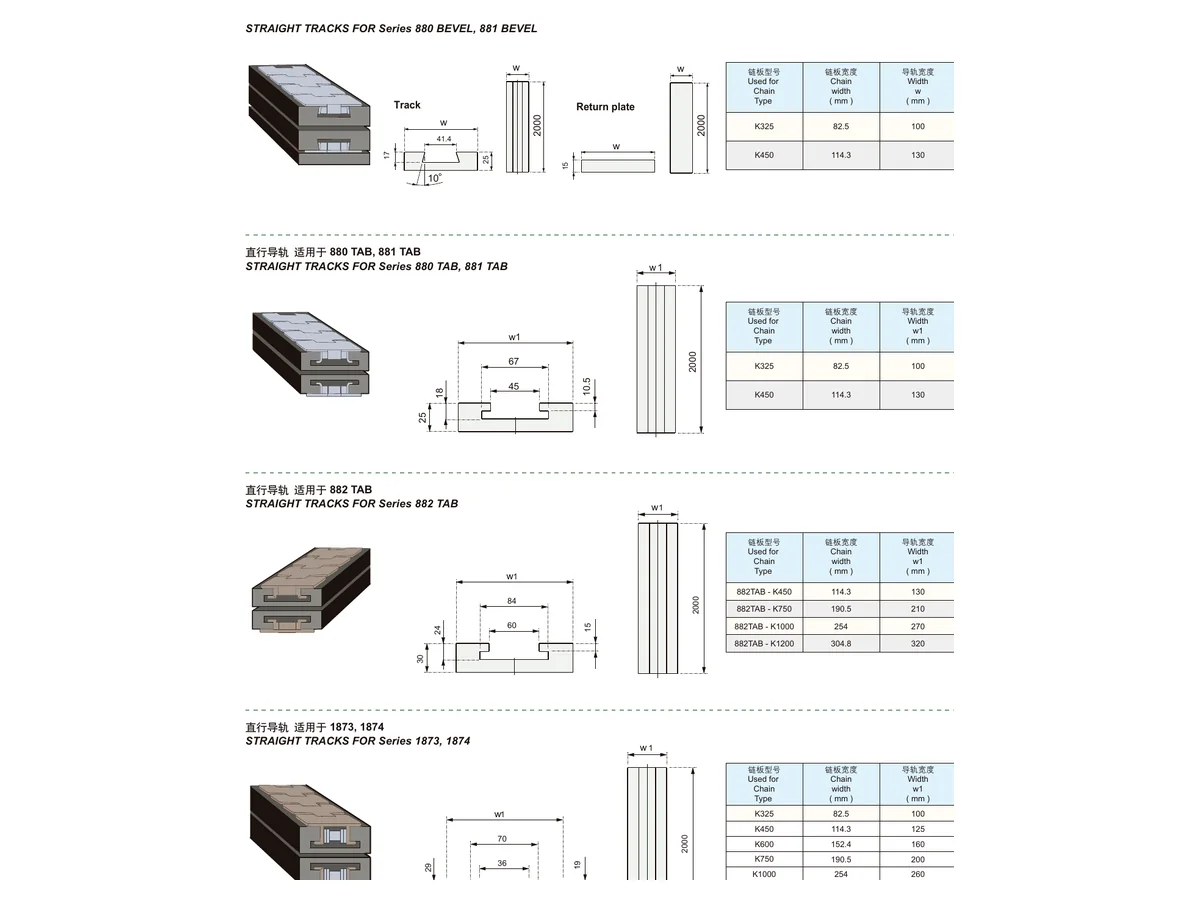
On a modular belts for beverage bottling & packaging conveyor, sprockets, pins, support strips and guide profiles belong in the review whenever they affect the process or refurbishment scope. Pitch is only one drive input; underside geometry and tooth engagement still have to match. Measure wear-strip and guide sections wherever they locate the belt or product.
安装和维护重点
Inspect guide rails and wear surfaces together with the belt. Container scuffing or tipping can come from guide geometry or transfer plates rather than the belt alone. Check sprocket engagement and debris around wet return paths.
For a new modular belts for beverage bottling & packaging installation, verify belt direction or orientation where applicable, sprocket position and engagement, guide clearance, return support and transfer alignment. For replacement work in this duty, compare the old wear pattern with the surrounding conveyor before assuming the belt itself caused the problem.
此申请的询价包
| 区域 | 发送 |
|---|---|
| 应用 | 工艺步骤和输送产品 |
| 皮带几何形状 | 如果知道,请提供场地倾斜度、宽度、迎风面积/开放面积和总长度/中心距。 |
| 传送带路径 | 直线/曲线、内半径和换乘点 |
| 驾驶 | 链轮照片/图纸、齿数、轴/孔径和间距 |
| 责任 | 负载、速度、干湿状况、清洁度和相关环境 |
| 商业的 | 数量、目的地、项目阶段和所需文件 |
应用问题
Which belt face is best for bottles?
A flat face is a common starting point, but bottle base, wet zones, accumulation and transfer geometry should decide the configuration.
Can you match an existing bottling belt without a model?
Yes. Send pitch, width, top/underside photos, sprocket details and the machine interface.
Should guides be included in the RFQ?
Yes when product stability or curve geometry depends on them. Guide profile and spacing can affect the result.
讨论一下这个传送带部分
Send the information already available for the modular belts for beverage bottling & packaging section. A drawing is useful, but a clear photo set plus a few measured dimensions can also start the configuration review.