Product Description
Modular water bag vulcanizing press to splice or repair conveyor belts
1600 Mm EA Bar Conveyor Belt Vulcanizer With Automated Control Boxesis the world’s most classic heavyweight belt sectional vulcanizing press. Distinguished by the core competencies of CZPT technology, the press is designed and assembled with the following components:
() Machine Feature:
High strength aluminum alloy beams
Flexible CZPT rubber “Pressure Bag” uniform pressure system
Special designed cooling system build-in platens
Innovative “Silicone Element” fast heating element
Platens can be rectangular or parallelogram and can be connected to other platens for scalability
()Machine Specification:
1.Voltage: 220V 380V 415V 525V 660V 50HZ/60HZ
2. Quick water cooling device: Average 15 minutes (from 145 ºC down to 70 ºC or even lower)
3. Heating time: from room temperature to vulcanization temperature of no more than 25 minutes
4. Heating plate surface temperature difference: ± 2.5 ºC
5. Curing temperature: 0 ~ 99min (according to the thickness of the belt to adjust)
6. QL Electric pump
(III) Specifications of CZPT Brand Belt Joint Vulcanizing Machine:
Before place 1 order, please confirm
Conveyor belt width;
Splice length;
Bias Angle;
Vulcanization pressure.
Voltage
|
A=length of platen along the belt B=width of platen across the belt on the bias C=Right angle dimension across the belt, plus edge overlap. D=Bias angle (0°/18°/20°/22°…..ect) E=Max Splice length |
| Specifications of ZLJ series Belt Joint Vulcanizing Machine | D=22 degree | |||||||
| Model Number |
Max Belt width(mm) |
Max Splice Length E(mm) |
Press Dimensions | Power (kw) |
Weight(kg) | |||
| A(mm) | C(mm) | B(mm) | External dimension (LxWxH)(mm) | |||||
| ZLJ-800 | 800 | 500 | 535 | 940 | 1571 | 1280x730x630 | 7.1 | 380 |
| 800 | 670 | 707 | 940 | 1571 | 1280x900x630 | 9.6 | 410 | |
| 800 | 750 | 790 | 940 | 1571 | 1280x980x630 | 10.7 | 420 | |
| 800 | 830 | 872 | 940 | 1571 | 1280x1050x630 | 11.9 | 460 | |
| 800 | 1000 | 1045 | 940 | 1571 | 1280x1220x630 | 14.3 | 490 | |
| ZLJ-1000 | 1000 | 500 | 535 | 1140 | 1220 | 1480x730x630 | 8.5 | 420 |
| 1000 | 670 | 707 | 1140 | 1220 | 1480x900x630 | 11.4 | 500 | |
| 1000 | 750 | 790 | 1140 | 1220 | 1480x980x630 | 12.8 | 520 | |
| 1000 | 830 | 872 | 1140 | 1220 | 1480x1050x630 | 14.2 | 550 | |
| 1000 | 1000 | 1045 | 1140 | 1220 | 1480x1220x630 | 17.1 | 590 | |
| ZLJ-1200 | 1200 | 500 | 535 | 1340 | 1420 | 1680x730x630 | 9.9 | 510 |
| 1200 | 670 | 707 | 1340 | 1420 | 1680x900x630 | 13.3 | 550 | |
| 1200 | 750 | 790 | 1340 | 1420 | 1680x980x630 | 14.9 | 590 | |
| 1200 | 830 | 872 | 1340 | 1420 | 1680x1050x630 | 16.5 | 610 | |
| 1200 | 1000 | 1045 | 1340 | 1420 | 1680x1220x630 | 19.1 | 650 | |
| ZLJ-1400 | 1400 | 500 | 535 | 1540 | 1620 | 1880x730x730 | 11.3 | 690 |
| 1400 | 670 | 707 | 1540 | 1620 | 1880x900x730 | 15.2 | 720 | |
| 1400 | 750 | 790 | 1540 | 1620 | 1880x980x730 | 17.0 | 750 | |
| 1400 | 830 | 872 | 1540 | 1620 | 1880x1050x730 | 18.8 | 780 | |
| 1400 | 1000 | 1045 | 1540 | 1620 | 1880x1220x730 | 22.7 | 850 | |
| ZLJ-1600 | 1600 | 500 | 535 | 1740 | 1820 | 2080x730x730 | 12.7 | 830 |
| 1600 | 670 | 707 | 1740 | 1820 | 2080x900x730 | 17.1 | 880 | |
| 1600 | 750 | 790 | 1740 | 1820 | 2080x980x730 | 19.1 | 920 | |
| 1600 | 830 | 872 | 1740 | 1820 | 2080x1050x730 | 21.2 | 940 | |
| 1600 | 1000 | 1045 | 1740 | 1820 | 2080x1220x730 | 25.5 | 1571 | |
| ZLJ-1800 | 1800 | 500 | 535 | 1940 | 2571 | 2280x730x730 | 14.1 | 880 |
| 1800 | 670 | 707 | 1940 | 2571 | 2280x900x730 | 19.0 | 920 | |
| 1800 | 750 | 790 | 1940 | 2571 | 2280x980x730 | 21.2 | 950 | |
| 1800 | 830 | 872 | 1940 | 2571 | 2280x1050x730 | 23.5 | 1050 | |
| 1800 | 1000 | 1045 | 1940 | 2571 | 2280x1220x730 | 28.3 | 1150 | |
| ZLJ-2000 | 2000 | 500 | 535 | 2140 | 2220 | 2480x730x820 | 15.5 | 920 |
| 2000 | 670 | 707 | 2140 | 2220 | 2480x900x820 | 20.8 | 1060 | |
| 2000 | 750 | 790 | 2140 | 2220 | 2480x980x820 | 23.3 | 1130 | |
| 2000 | 830 | 872 | 2140 | 2220 | 2480x1050x820 | 25.8 | 1240 | |
| 2000 | 1000 | 1045 | 2140 | 2220 | 2480x1220x820 | 31.1 | 1370 | |
| ZLJ-2200 | 2200 | 500 | 535 | 2340 | 2420 | 2680x730x820 | 16.9 | 1571 |
| 2200 | 670 | 707 | 2340 | 2420 | 2680x900x820 | 22.7 | 1190 | |
| 2200 | 750 | 790 | 2340 | 2420 | 2680x980x820 | 25.4 | 1310 | |
| 2200 | 830 | 872 | 2340 | 2420 | 2680x1050x820 | 28.1 | 1460 | |
| 2200 | 1000 | 1045 | 2340 | 2420 | 2680x1220x820 | 33.9 | 1590 | |
(IV) Quality assurance:
1. 12 months warranty for whoke machine and spare parts.
2. Using fancy quality parts.
3. Demo running the vulcanizer before delivery, to find out any potential fault.
Our Service:
1. Quick reponse, for any of your inquiry, we will reply you within 24 hour.
2. Our well-tranied college provide sales and after-sale services who can speak English and discuss with you using your local language.
3. We offer OEM service. Your logo can be print on belt hot splicing press, you also can customize the retail box.
4. We have rich experience in this rubber belt hot splice firld, and an do R&D work foryou.
5. Normal model can be produced within 10 day. Fastest than ever.
| After-sales Service: | 1 Years |
|---|---|
| Warranty: | 1 Years |
| Certification: | CE |
| Condition: | New |
| Customized: | Customized |
| Automatic Grade: | Semiautomatic |
| Customization: |
Available
| Customized Request |
|---|
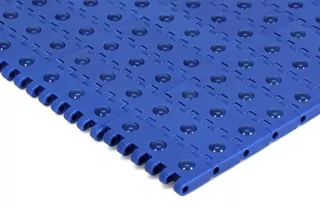
Can modular belts be used in heavy-duty applications, such as mining or construction?
Yes, modular belts can be used in heavy-duty applications, including mining and construction. Here’s a detailed explanation:
Modular belts are designed to offer robust performance and durability, making them suitable for a wide range of industrial applications, including heavy-duty environments. In heavy-duty industries like mining and construction, where materials are often large, heavy, and abrasive, modular belts provide several advantages over traditional conveyor belt systems.
- Strength and Load Capacity:
Modular belts are engineered to handle heavy loads and withstand the demanding conditions encountered in mining and construction operations. They are constructed using high-strength materials, such as reinforced thermoplastics or metals, which offer excellent load-carrying capacity and resistance to impact and abrasion. This enables modular belts to transport heavy materials, such as ore, gravel, rocks, or construction aggregates, with ease and reliability.
- Flexibility and Adaptability:
Modular belts exhibit flexibility and adaptability, which are essential in heavy-duty applications. The modular design allows for easy customization of the belt width, length, and configuration to accommodate specific material handling requirements. Belt modules can be easily added, removed, or reconfigured to adapt to changes in the production process or conveyor layout. This flexibility enables modular belts to fit into existing conveyor systems or be designed for unique applications in mining and construction, optimizing material flow and operational efficiency.
- Resistance to Wear and Tear:
Heavy-duty applications expose conveyor belts to harsh conditions, including abrasive materials, impact, and high levels of mechanical stress. Modular belts are designed to withstand such wear and tear, thanks to their rugged construction and specialized surface features. The modules often have reinforced or textured surfaces that enhance grip and prevent material slippage, reducing the risk of belt damage or product spillage. Additionally, modular belts are resistant to abrasion and tearing, ensuring prolonged service life in challenging mining and construction environments.
- Chemical and Moisture Resistance:
In certain mining and construction applications, conveyor belts may encounter chemicals, moisture, or other environmental factors that can degrade the belt material. Modular belts are available in chemically resistant materials, such as polyethylene or polypropylene blends, which can withstand exposure to various chemicals and moisture without significant deterioration. This chemical and moisture resistance ensures that modular belts maintain their structural integrity and performance even in harsh operating conditions.
- Easy Maintenance and Repairs:
Maintenance and repair requirements are inevitable in heavy-duty applications. Modular belts offer advantages in terms of maintenance and repairs. The modular design allows for quick and cost-effective repairs, as individual modules can be replaced without replacing the entire belt. This reduces downtime and minimizes production disruptions. Additionally, modular belts are generally easier to clean and sanitize, contributing to overall maintenance efficiency in heavy-duty environments.
In summary, modular belts can indeed be used in heavy-duty applications, including mining and construction. Their strength, load capacity, flexibility, resistance to wear and tear, chemical and moisture resistance, and ease of maintenance make them a viable choice for efficiently handling heavy materials and operating reliably in demanding industrial settings.
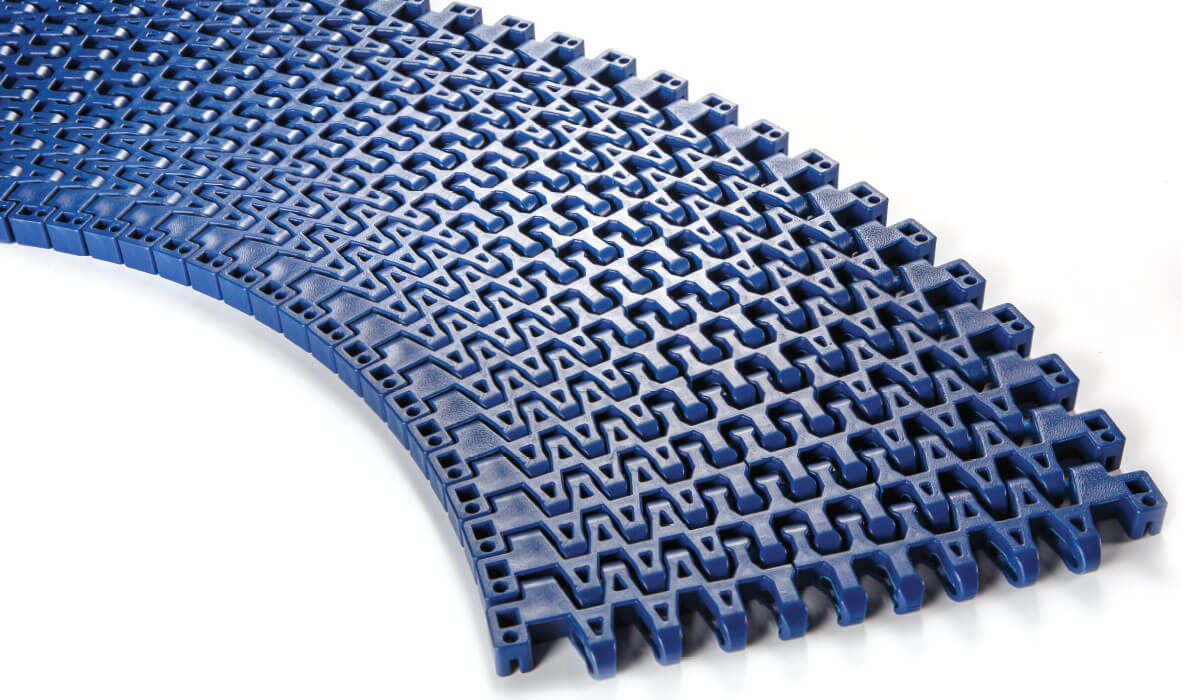
Can you provide examples of products or machinery that use modular belts for conveying materials?
Modular belts are widely used in various industries and applications for conveying materials. They are employed in a range of products and machinery to ensure efficient and reliable material handling. Here are some examples of products and machinery that utilize modular belts:
- Food Processing Equipment:
In the food processing industry, modular belts are extensively used in equipment such as conveyors, sorting systems, and packaging machines. They are employed to transport a wide range of food products, including baked goods, fruits and vegetables, meat and poultry, dairy products, and packaged snacks. Modular belts help ensure hygienic and gentle handling of food items, as well as facilitate efficient product flow during processing, sorting, and packaging operations.
- Beverage Bottling Lines:
In beverage bottling plants, modular belts are commonly integrated into conveyor systems for the transportation of bottles, cans, and other containers. They are utilized in various stages of the bottling process, including filling, capping, labeling, and packaging. Modular belts provide a smooth and reliable conveying surface, allowing for seamless movement of containers and ensuring precise alignment during filling and capping operations.
- Automotive Manufacturing:
In automotive manufacturing facilities, modular belts are utilized in assembly lines and material handling systems. They are employed to convey various automotive components, such as engines, transmissions, chassis parts, and interior components. Modular belts offer flexibility in configuring conveyor systems to accommodate different assembly processes and part sizes. They help streamline production and facilitate the efficient transfer of components between workstations.
- Pharmaceutical Production:
In the pharmaceutical industry, modular belts play a crucial role in conveying materials during the production of medications and medical devices. They are used in processes such as tablet and capsule handling, packaging, and labeling. Modular belts provide a clean and hygienic conveying surface, ensuring compliance with strict regulatory requirements. They enable precise positioning of pharmaceutical products during packaging and facilitate efficient material flow in pharmaceutical production lines.
- E-commerce and Logistics:
In e-commerce warehouses, distribution centers, and logistics facilities, modular belts are employed in conveyor systems for the sorting, merging, and transportation of packages and parcels. They are used to handle a wide variety of products, including boxes, cartons, totes, and polybags. Modular belts offer a reliable and flexible conveying solution in high-throughput environments, enabling efficient order fulfillment and smooth material flow in the logistics and supply chain industry.
- Packaging Machinery:
Modular belts are extensively integrated into packaging machinery, such as form-fill-seal machines, carton erectors, case packers, and palletizers. They are used to transport packaging materials, primary and secondary packaging, and finished products. Modular belts help ensure precise and synchronized movement of packages during the packaging process, optimizing productivity and minimizing product damage.
- Agricultural Equipment:
In the agricultural sector, modular belts are utilized in equipment such as harvesters, seed processing machines, and sorting systems. They are employed to handle crops, seeds, and other agricultural products during harvesting, processing, and packaging operations. Modular belts provide reliable conveying surfaces that can withstand outdoor conditions and facilitate the efficient movement of agricultural materials.
- Material Handling in Warehouses:
Modular belts are used in warehouse material handling systems, including conveyor systems for order picking, sorting, and distribution. They are employed to transport a wide range of products, including packages, cartons, and bins. Modular belts offer customization options to meet specific warehouse requirements, such as the ability to handle different product sizes and weights, adapt to varying layouts, and provide reliable and efficient material flow.
These are just a few examples of the many products and machinery that utilize modular belts for conveying materials. The versatility, reliability, and customization options of modular belts make them a popular choice in various industries where efficient and precise material handling is essential.
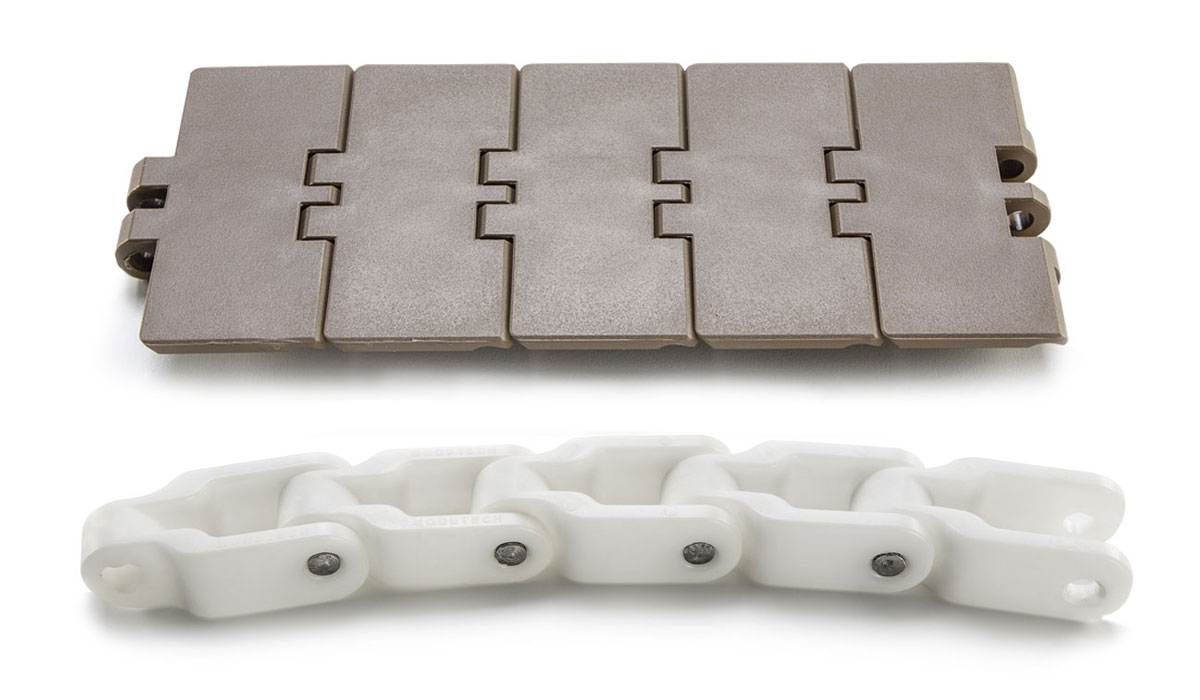
Can you explain the advantages of using modular belts in conveyor systems?
Using modular belts in conveyor systems offers several advantages over traditional conveyor belts. These advantages contribute to improved efficiency, flexibility, and ease of maintenance. Here are the key advantages of using modular belts:
- Versatility:
Modular belts are highly versatile and can be customized to suit specific application requirements. Their modular design allows for easy configuration, enabling the creation of conveyor systems of various sizes, shapes, and layouts. The interlocking modules can be easily added, removed, or repositioned, providing flexibility in adapting the conveyor system to changing needs or production processes.
- Enhanced Durability:
Modular belts are known for their durability and longevity. Made from robust plastic materials, such as polypropylene or polyethylene, they exhibit excellent resistance to wear, impact, and chemical substances. The interlocking modules distribute the load evenly across the belt, reducing stress on individual components and extending the belt’s lifespan. This durability translates to reduced maintenance requirements and lower overall operating costs.
- Easy Maintenance:
Maintenance of modular belts is relatively simple and convenient. The individual modules can be easily replaced if damaged or worn out, without the need to replace the entire belt. This modular replacement approach minimizes downtime and reduces maintenance costs. Additionally, modular belts have a smooth and non-porous surface, which makes them easy to clean and resistant to the accumulation of debris or contaminants, ensuring hygienic operation in industries such as food processing or pharmaceuticals.
- Accurate Tracking:
Modular belts have excellent tracking capabilities, meaning they can maintain proper alignment during operation. The interlocking modules ensure that the belt remains flat and stable, minimizing the risk of tracking issues or belt misalignment. Accurate tracking reduces the chances of product spillage, improves overall system efficiency, and prolongs the life of the belt and other conveyor components.
- Improved Product Handling:
The design of modular belts allows for precise control and handling of various products. The customizable surface patterns or configurations of the modules create specific gripping or friction characteristics that suit different materials or applications. This improves the stability and control of products during transportation, especially for inclined or declined conveyors. Modular belts can handle a wide range of products, from small items to large, heavy loads, without compromising performance.
- Reduced Noise and Vibrations:
Modular belts tend to generate less noise and vibrations compared to traditional conveyor belts. The interlocking modules and their design help dampen vibrations and minimize noise during operation. This is particularly beneficial in industrial environments where noise reduction is desired for worker comfort or to comply with noise regulations.
- Easy Integration:
Modular belts can be easily integrated with other conveyor components or systems. They can accommodate accessories such as side guides, cleats, or flights to facilitate specific material handling requirements. Additionally, modular belts can be seamlessly integrated with automation systems, sensors, or control devices, allowing for efficient and automated material flow and process control.
In summary, using modular belts in conveyor systems provides advantages such as versatility, enhanced durability, easy maintenance, accurate tracking, improved product handling, reduced noise and vibrations, and easy integration. These benefits make modular belts a preferred choice in various industries, enhancing overall productivity, efficiency, and reliability of conveyor systems.


editor by CX 2023-12-04