Product Description
Solution Description
Vacuum the cavity of the plaster mixer to eliminate air bubbles in the plaster slurry.
Merchandise Parameters
| Vacuum pump Specs | |||||||||
| Design | Velocity Price m3/h |
Limit pressure Pa |
Power KW |
Max water air absorption capability kg/h |
Inlet dia of air Inch |
Pump rpm Rpm |
Oil consumption L |
Weight Kg |
Size L*W*H cm |
| SVF571 SVC571 |
10 | eighty | .37/.fifty five | .02 | G1/two | 1400 | .five | eighteen | forty one*24*21 |
| SVF571 SVC571 |
twenty | eighty | .seventy five/.nine | .04 | G1/two | 2800 | .five | twenty | 41*24*21 |
| SVF040 SVC040 |
forty | 50 | one.one | .seventy five | G11/four | 1400 | one.three | 48 | 63*29*26 |
| SVF063 SVC063 |
sixty three | 50 | 1.5 | 1 | G11/4 | 1400 | one.3 | 50 | 66*30*27 |
| SVF080 SVC080 |
80 | fifty | two.two | 1.5 | G11/four | 2800 | one.3 | fifty | 66*30*27 |
| SVF100 SVC100 |
a hundred | 50 | 3 | one.six | G11/4 | 1420 | 2 | 70 | 73*41*29 |
| SVF160 SVC160 |
160 | 50 | four | two.seven | G2 | 1440 | 5 | 160 | ninety*54*45 |
| SVF200 SVC200 |
200 | 50 | 5.five | three.four | G2 | 1440 | five | a hundred and sixty | ninety*54*forty five |
| SVF250 SVC250 |
250 | fifty | 5.5/7.5 | 4.four | G2 | 1440 | five | one hundred ninety | one hundred*54*45 |
| SVF300 SVC300 |
300 | 50 | 7.five | 5.four | G2 | 1440 | 5 | 220 | 106*fifty four*forty five |
| SVF630 SVC630 |
630 | 50 | 15 | 10 | G3 | 1440 | 15 | 640 | one hundred fifty*90*76 |
Functioning principle
Suction vacuum is understood by a direct-linked rotary vane vacuum pump. The vacuum pump is routinely controlled by the start off button and the electric make contact with vacuum gauge. In the preliminary condition, the start off button starts the vacuum pump, and the fuel in the mixing tank is sucked out by the vacuum pump, so that damaging stress is fashioned in the tank. The vacuum degree in the tank is exhibited and managed by the electrical contact vacuum gauge. When the specified higher restrict is attained, the vacuum pump will automatically cease running. There is a vacuum liquid dust filter (VAF-32) and a one particular-way valve between the vacuum pump and the mixing barrel. The perform of the filter is to stop impurities from coming into the vacuum pump, and the one-way valve is to avoid the air from returning when the vacuum pump stops functioning.
Revenue market place
FAQ
Q1. How lengthy will your engineer get to our factory?
Our After-income Specialist would contact with you, validate the last scheduling in accordance to your sensible request.
Q2. How several days will you end installing?
We will finish set up and training according to the equipment design.
Q3. What should we charge for your engineer?
You must demand for the value of our engineer’s visa, air tickets, SIM card, resort, food and neighborhood targeted traffic.
Q4. How extended is your machine’s warranty time period?
All our equipment have 1 year ensure, beginning from finished set up.
Q5. How could we do soon after 1 year guarantee interval?
We also can do provider for you, but you require shell out salary for my technician 100USD/day.
Q6. How could we do if the components broken inside of guarantee?
We would specific the free replacement areas during the warranty day.
Q7. Does your engineer recognize English?
Our engineers realize a minor English. All of our engineer have more than 5 a long time machine set up expertise. In addition, they can use entire body language to connect with customer.
Q8. How do we solve the equipment problem following your engineer leaving?
Normally speaking, there will be no issue right after complete setting up. In case you have any issue. You can speak to our right after revenue professional at any time. Our soon after-income section has thirty engineers. Our engineers will take a remedy video clip in accordance your description.
|
US $1,000-1,500 / Piece | |
3 Pieces (Min. Order) |
###
| Oil or Not: | Compressor |
|---|---|
| Structure: | Rotary Vacuum Pump |
| Exhauster Method: | Positive Displacement Pump |
| Vacuum Degree: | Vacuum |
| Work Function: | Pre-Suction Pump |
| Working Conditions: | Wet |
###
| Customization: |
Available
|
|---|
###
| Vacuum pump Specifications | |||||||||
| Model | Speed Rate m3/h |
Limit pressure Pa |
Power KW |
Max water air absorption capacity kg/h |
Inlet dia of air Inch |
Pump rpm Rpm |
Oil consumption L |
Weight Kg |
Size L*W*H cm |
| SVF010 SVC010 |
10 | 80 | 0.37/0.55 | 0.02 | G1/2 | 1400 | 0.5 | 18 | 41*24*21 |
| SVF020 SVC020 |
20 | 80 | 0.75/0.9 | 0.04 | G1/2 | 2800 | 0.5 | 20 | 41*24*21 |
| SVF040 SVC040 |
40 | 50 | 1.1 | 0.75 | G11/4 | 1400 | 1.3 | 48 | 63*29*26 |
| SVF063 SVC063 |
63 | 50 | 1.5 | 1 | G11/4 | 1400 | 1.3 | 50 | 66*30*27 |
| SVF080 SVC080 |
80 | 50 | 2.2 | 1.5 | G11/4 | 2800 | 1.3 | 50 | 66*30*27 |
| SVF100 SVC100 |
100 | 50 | 3 | 1.6 | G11/4 | 1420 | 2 | 70 | 73*41*29 |
| SVF160 SVC160 |
160 | 50 | 4 | 2.7 | G2 | 1440 | 5 | 160 | 90*54*45 |
| SVF200 SVC200 |
200 | 50 | 5.5 | 3.4 | G2 | 1440 | 5 | 160 | 90*54*45 |
| SVF250 SVC250 |
250 | 50 | 5.5/7.5 | 4.4 | G2 | 1440 | 5 | 190 | 100*54*45 |
| SVF300 SVC300 |
300 | 50 | 7.5 | 5.4 | G2 | 1440 | 5 | 220 | 106*54*45 |
| SVF630 SVC630 |
630 | 50 | 15 | 10 | G3 | 1440 | 15 | 640 | 150*90*76 |
|
US $1,000-1,500 / Piece | |
3 Pieces (Min. Order) |
###
| Oil or Not: | Compressor |
|---|---|
| Structure: | Rotary Vacuum Pump |
| Exhauster Method: | Positive Displacement Pump |
| Vacuum Degree: | Vacuum |
| Work Function: | Pre-Suction Pump |
| Working Conditions: | Wet |
###
| Customization: |
Available
|
|---|
###
| Vacuum pump Specifications | |||||||||
| Model | Speed Rate m3/h |
Limit pressure Pa |
Power KW |
Max water air absorption capacity kg/h |
Inlet dia of air Inch |
Pump rpm Rpm |
Oil consumption L |
Weight Kg |
Size L*W*H cm |
| SVF010 SVC010 |
10 | 80 | 0.37/0.55 | 0.02 | G1/2 | 1400 | 0.5 | 18 | 41*24*21 |
| SVF020 SVC020 |
20 | 80 | 0.75/0.9 | 0.04 | G1/2 | 2800 | 0.5 | 20 | 41*24*21 |
| SVF040 SVC040 |
40 | 50 | 1.1 | 0.75 | G11/4 | 1400 | 1.3 | 48 | 63*29*26 |
| SVF063 SVC063 |
63 | 50 | 1.5 | 1 | G11/4 | 1400 | 1.3 | 50 | 66*30*27 |
| SVF080 SVC080 |
80 | 50 | 2.2 | 1.5 | G11/4 | 2800 | 1.3 | 50 | 66*30*27 |
| SVF100 SVC100 |
100 | 50 | 3 | 1.6 | G11/4 | 1420 | 2 | 70 | 73*41*29 |
| SVF160 SVC160 |
160 | 50 | 4 | 2.7 | G2 | 1440 | 5 | 160 | 90*54*45 |
| SVF200 SVC200 |
200 | 50 | 5.5 | 3.4 | G2 | 1440 | 5 | 160 | 90*54*45 |
| SVF250 SVC250 |
250 | 50 | 5.5/7.5 | 4.4 | G2 | 1440 | 5 | 190 | 100*54*45 |
| SVF300 SVC300 |
300 | 50 | 7.5 | 5.4 | G2 | 1440 | 5 | 220 | 106*54*45 |
| SVF630 SVC630 |
630 | 50 | 15 | 10 | G3 | 1440 | 15 | 640 | 150*90*76 |
Three basic types of pulleys, their applications and ideal mechanical advantages
There are three basic types of pulleys: movable, fixed and compound. Each has its advantages and disadvantages, and you should be able to judge which type is best for your needs by looking at the table below. Once you have mastered the different types of pulleys, you can choose the right pulley for your next project. Now that you have mastered the three basic types, it is time to understand their applications and ideal mechanical advantages.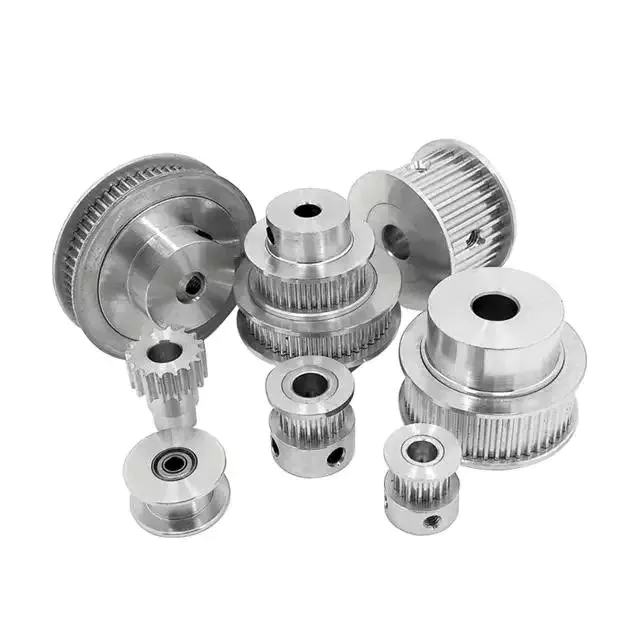
describe
The stress characteristics of a pulley depend on its size and construction. These stresses are derived by comparing the stress characteristics of different pulley designs. Stress criteria include static and fatigue strength analyses and specify maximum stress ranges. Stresses are calculated in a 3D stress field, including radial, tangential and axial stresses. The stress characteristics of pulleys are critical to the design and manufacture of industrial machines.
The principal stresses on the pulley shell are distributed in the tangential and hoop directions, close to the centerline of the pulley. If the pulley has a wide face, the axial stress occurring near the shell/disk junction can be large. The stress distribution was determined using British Standard BS5400 Part 10: Stresses at the shell and end disc connections for infinite fatigue life.
Another type of composite is a pulley with a belt section. Such structures are well known in the art. The corresponding help chapters for these elements contain detailed descriptions of the internal structure of these components. Chamfers between pulleys can also be defined using multiple tapers, with a smaller taper extending from midpoint 44 to large diameter 42. Additionally, the pulley can have multiple taper angles, and as the pulley moves away, the taper angle is from the center.
type
A pulley system uses a rope to move the object and one side of the rope to lift the load. The load is attached to one end of the pulley, while the other end can move freely in space. The force applied to the free end of the rope pulls the load up or down. Because of this, the mechanical advantage of the movable pulley is two to one. The greater the force applied to the free end of the rope, the greater the amount of movement achieved.
There are three common types of pulleys. The cast-iron variety has a rim at the front and a hub at the back. The arms of the pulley can be straight or curved. When the arms contract and yield instead of breaking, they are in tension. The top of the pulley centers the belt in motion and is available in widths ranging from 9mm to 300mm.
The rope, hub and axle are mounted on the pulley. They are common and versatile mechanical devices that make it easier to move or lift objects. Some pulleys change the direction of the force. Others change the magnitude. All types of pulleys can be used for a variety of different applications. Here are some examples. If you’re not sure which type to choose, you can find more resources online.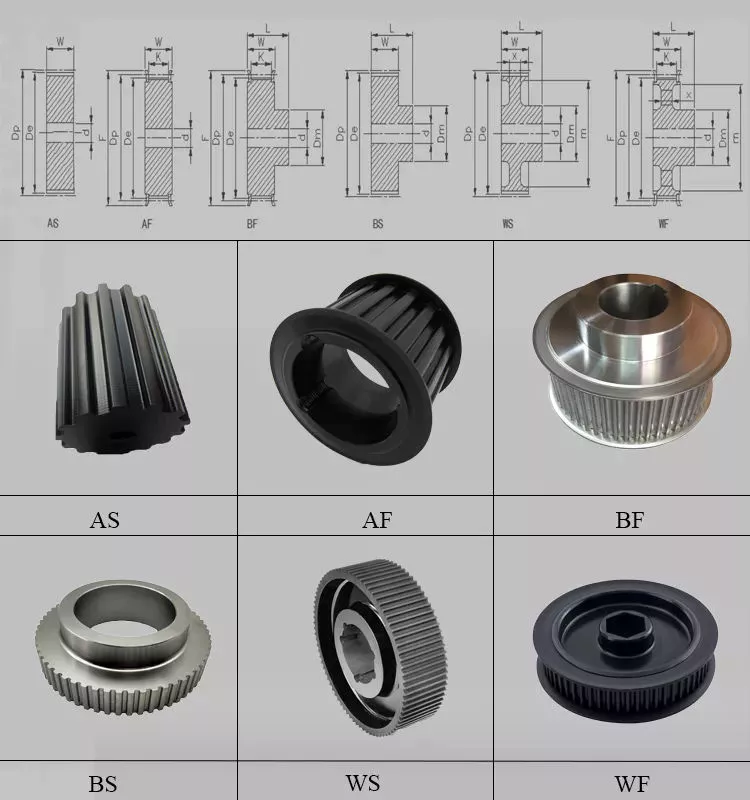
application
The applications for pulleys are almost limitless. This simple machine turns complex tasks into simple ones. They consist of a rope or chain wrapped around a wheel or axle. Using ropes, one can lift heavy objects without the enormous physical exertion of traditional lifting equipment. Some pulleys are equipped with rollers, which greatly magnifies the lifting force.
When used properly, the pulley system can change the direction of the applied force. It provides a mechanical advantage and allows the operator to remain separate from heavy objects. They are also inexpensive, easy to assemble, and require little lubrication after installation. Also, once installed, the pulley system requires little maintenance. They can even be used effortlessly. Despite having many moving parts, pulley systems do not require lubrication, making them a cost-effective alternative to mechanical lifts.
Pulleys are used in many applications including adjustable clotheslines in different machines, kitchen drawers and motor pulleys. Commercial users of pulley systems include cranes. These machines use a pulley system to lift and place heavy objects. They are also used by high-rise building washing companies. They can easily move a building without compromising its structural integrity. As a result, many industries rely on technology to make elevators easier.
Ideal mechanical advantage
The ideal mechanical advantage of a pulley system is the result of rope tension. The load is pulled to the center of the pulley, but the force is evenly distributed over the cable. Two pulleys will provide the mechanical advantage of two pulleys. The total energy used will remain the same. If multiple pulleys are used, friction between pulleys and pulleys reduces the return of energy.
Lever-based machines are simple devices that can work. These include levers, wheels and axles, screws, wedges and ramps. Their ability to work depends on their efficiency and mechanical superiority. The ideal mechanical advantage assumes perfect efficiency, while the actual mechanical advantage takes friction into account. The distance traveled by the load and the force applied are also factors in determining the ideal mechanical advantage of the pulley.
A simple pulley system has an MA of two. The weight attached to one end of the rope is called FA. Force FE and load FL are connected to the other end of the rope. The distance that the lifter pulls the rope must be twice or half the force required to lift the weight. The same goes for side-by-side pulley systems.
Materials used in manufacturing
While aluminum and plastic are the most common materials for making pulleys, there are other materials to choose from for your timing pulleys. Despite their different physical properties, they all offer similar benefits. Aluminum is dense and corrosion-resistant, and plastic is lightweight and durable. Stainless steel is resistant to stains and rust, but is expensive to maintain. For this reason, aluminum is a popular choice for heavy duty pulleys.
Metal can also be used to make pulleys. Aluminum pulleys are lightweight and strong, while other materials are not as durable. CZPT produces aluminium pulleys, but can also produce other materials or special finishes. The list below is just representative of some common materials and finishes. Many different materials are used, so you should discuss the best options for your application with your engineer.
Metals such as steel and aluminum are commonly used to make pulleys. These materials are relatively light and have a low coefficient of friction. Steel pulleys are also more durable than aluminum pulleys. For heavier applications, steel and aluminum are preferred, but consider weight limitations when selecting materials. For example, metal pulleys can be used in electric motors to transmit belt motion.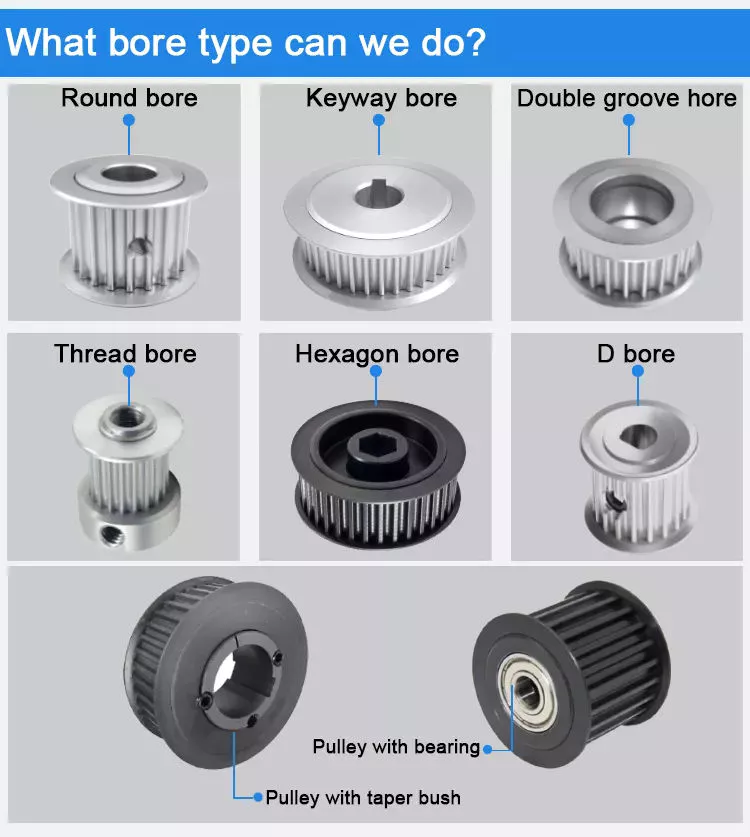
cost
Replacing a tensioner in a car’s engine can cost anywhere from $90 to $300, depending on the make and model of the car. Cost can also be affected by the complexity of the pulley system and how many pulleys are required. Replacement costs may also increase depending on the severity of the damage. The cost of replacing pulleys also varies from car to car, as different manufacturers use different engines and drivetrains.
Induction motors have been an industrial workhorse for 130 years, but their cost is growing. As energy costs rise and the cost of ownership increases, these motors will only get more expensive. New technologies are now available to increase efficiency, reduce costs and improve safety standards.
The average job cost to replace an idler varies from $125 to $321, including labor. Parts and labor to replace a car pulley can range from $30 to $178. Labor and parts can cost an additional $10 to $40, depending on the make and model of the car. But the labor is worth the money because these pulleys are a critical part of a car’s engine.


editor by czh 2022-11-27