Product Description
High Quality Polyester Hevay Duty Rubber Conveyor Belts Ep Nn Cc Multi-Ply Rubber Conveyor Belts
Overview
Quick details
Place of Origin:ZHangZhoug,China Brand Name: FUDA
Model Number: rubber conveyor belt Processing Service: Moulding,Cutting
Product name: Rubber conveyor belt Feature: Abrasion resistant
Application: cement, crusher plant, mining, port Certificate: IS09 Meter/Meters per Day
Packaging&Delivery
Packaging Details : Standard export packing or according to your demands
Port HangZhou/ZheJiang
STEEL CORD CONVEYOR BELT MULT-PLY CONVEYOR BELT
Example:2000M DIN22131 1200 ST1600 7/5 X Example:1000M DIN22102 1000 EP800/4 6/2 Y
2000M length 1000M length
DIN22131 Application standards DIN22102 Application standards
1200 Belt width in mm 1000 Belt width in mm
ST Carcass material(steel cords) EP Carcass material
1600 Belt mini breaking strength 800 Belt mini breaking strength
7 Top cover thickness in mm 6 Top cover thickness in mm
5 Bottom cover thicknessin mm 2 Bottom cover thicknessin mm
X cover grade Y cover grade
| Cover grade standards | ||||
| Grade | standard | Abrasion(MM3) | Breaking strength(N/mm2) | Elongation at break (%) |
| W | DIN22102 | 90 | 18 | 400 |
| x | DIN22102 | 120 | 25 | 450 |
| Y | DIN22102 | 150 | 20 | 450 |
| Z | DIN22102 | 200 | 15 | 350 |
| H | ISO15236 | 120 | 24 | 450 |
| H | ISO15236 | 100 | 18 | 400 |
| L | ISO15236 | 200 | 18 | 350 |
| K | ISO15236 | 200 | 15 | 350 |
| I | RMA | 170 | 17 | 400 |
| II | RMA | 200 | 14 | 400 |
| Notice:AS standards(A E F M N S),ARPM,E,K,S,R,T,C,we will quote you directly | ||||
| Элемент | ST630 | ST800 | ST1000 | ST1250 | ST1600 | ST2000 | ST2500 | ST3150 | ST3500 | ST4000 | ST4500 | ST5000 | ST5400 |
| Tensile strength(N/mm) | 630 | 800 | 1000 | 1250 | 1600 | 2000 | 2500 | 3150 | 3500 | 4000 | 4500 | 5000 | 5400 |
| Diameter(mm) | 3 | 3.5 | 4 | 4.5 | 5 | 6 | 7.2 | 8.1 | 8.6 | 8.9 | 9.7 | 10.9 | 11.3 |
| pitch(mm) | 10±1.5 | 10±1.5 | 12±1.5 | 12±1.5 | 12±1.5 | 12±1.5 | 15+1.5 | 15+1.5 | 15+1.5 | 15+1.5 | 16+1.5 | 17±1.5 | 17±1.5 |
| Top cover thickness(mm) | 5 | 5 | 6 | 6 | 6 | 8 | 8 | 8 | 8 | 8 | 8 | 8.5 | 9 |
| Bottom cover thickness(mm) | 5 | 5 | 6 | 6 | 6 | 8 | 8 | 8 | 8 | 8 | 8 | 8.5 | 9 |
FAQ
1.How soon can we get a reply after we send you an inquiry?
—We will reply to you within 24 hours after receiving the inquiry in working days.
2.Are you a direct manufacturer or a trading company?
—We have our own factory,and we also have our own international trade department,we produce and sell ourselves.
3.What products can you provide?
—We mainly produce:ST cord conveyor belt,Sensor conveyor belt,Pip conveyor belt,Anti-tear conveyor belt,
EPDM conveyor belt,High temperature resistant conveyor belt,Heat resistant conveyor belt,Fire resistantconveyor belt,EP conveyor belt,NN conveyor belt,SW fabric conveyor belt,cotton conveyor belt,Chevronconveyor belt,Rough top conveyor belt,Oil resistant conveyor belt,Chemical resistant conveyor belt,Flattransmission belt,Rubber V belt.
4.What application fields are your products mainly involved in?
—Mainly used for transportation tasks in metallurgy,chemical,cement,coking,steel and other industries
5.What is the production capacity of your company?
—Our company covers an area of 35000 square meter and has 25000Square meter of building parts,We have
fixed assets of 250 million Yuan,registered capital of 108 million Yuan,its a set of products R&D,design,production,sales and service in 1 of the production base of rubber belt.
6.How many employees does your company have and how many technicians are there?
—The company has more than 280 employees,including more than 50 professional technicians and more than
25 engineers.
7.How does your company guarantee product quality?
—Fuda regards the quality of life,strict quality control.We have a complete set of physical and chemicaltesting equipment and a quality management team,the introduction of ZheJiang Gotech’s electronic tensilemachine,moving die rheometer,abrasion machine,mooney viscometer and other international leading testing equipment,raw material analysis,semi-finished products control,finished product physic al properties and other projects for testing.
8.What is the payment method?
—When quoting,we will confirm the transaction method with you,FOB,CIF,CNF or other methods.
9.How to deliver goods to customers?
—Usually,we ship by sea because we are in HangZhou,we are very close to the port,and sea export is veryconvenient.Of course,if the customer’s cargo is urgent,we can also transport it by air.The internationalairport is very close to us.
/* January 22, 2571 19:08:37 */!function(){function s(e,r){var a,o={};try{e&&e.split(“,”).forEach(function(e,t){e&&(a=e.match(/(.*?):(.*)$/))&&1
| Type: | Abrasion Resistant |
|---|---|
| Material: | Nature Rubber |
| Inside Material: | Steel Cord/Ep/Nn |
| Feature: | Oil-Resistant, Acid And Alkali Resistant, Tear-Resistant, Heat-Resistant, Cold-Resistant, Wear-Resistant, Abrasion Resistant |
| Tensile Strength: | Strong |
| Certificate: | ISO9001, ISO14001 |
| Samples: |
US$ 0/Piece
1 Piece(Min.Order) | |
|---|
| Customization: |
Available
| Customized Request |
|---|
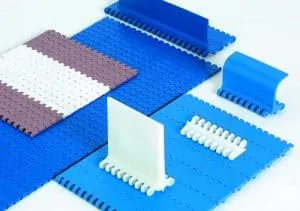
Are there sustainability aspects associated with the use of modular belts in material handling systems?
Yes, there are sustainability aspects associated with the use of modular belts in material handling systems. Here’s a detailed explanation:
The adoption of modular belts in material handling systems brings several sustainability benefits, addressing environmental, social, and economic aspects of sustainability.
- Resource Efficiency:
Modular belts are designed to optimize resource efficiency during their production and use. The manufacturing process of modular belts has become more environmentally friendly, with advancements in materials and production techniques. Manufacturers are increasingly utilizing recycled materials in the production of modular belts, reducing the demand for virgin resources. Additionally, modular belts often have a longer service life compared to traditional conveyor belts, reducing the frequency of replacements and the associated resource consumption.
- Energy Efficiency:
Modular belts contribute to energy efficiency in material handling systems. Their low friction characteristics and optimized design features minimize energy losses during operation. Reduced friction between the belt and conveyor components results in lower power requirements for driving the belt, leading to energy savings. The use of precise sprocket engagement and accurate belt tracking also helps to optimize power transmission and minimize energy waste. Overall, the energy efficiency of modular belts contributes to lower operational costs and reduced environmental impact.
- Waste Reduction:
Modular belts are designed for durability and longevity, resulting in reduced waste generation. Their robust construction and resistance to wear and tear extend their service life, reducing the frequency of belt replacements. Moreover, modular belts are often repairable, with the ability to replace individual modules or segments instead of replacing the entire belt. This repairability reduces waste generation and promotes a more sustainable approach to maintenance and replacement in material handling systems.
- Hygiene and Cleanability:
Hygiene is a significant aspect of sustainability in industries such as food processing and pharmaceuticals. Modular belts are designed with cleanability in mind, featuring smooth surfaces and reduced crevices where contaminants can accumulate. This design minimizes the risk of bacterial growth and improves food safety compliance. Additionally, some modular belts incorporate antimicrobial additives that further enhance hygiene and reduce the need for chemical cleaning agents. The improved cleanability of modular belts contributes to sustainable operations by ensuring product integrity, reducing waste due to contamination, and minimizing the use of cleaning chemicals.
- Adaptability and Flexibility:
Modular belts offer adaptability and flexibility in material handling systems, contributing to sustainability. Their modular design allows for easy customization and reconfiguration, enabling efficient use of space and resources. Modular belts can be easily integrated into existing conveyor systems or designed for unique applications, optimizing material flow and reducing the need for extensive system modifications or new installations. This adaptability and flexibility result in resource savings and increased operational efficiency, aligning with sustainable practices.
- Recyclability:
Many modular belts are made from recyclable materials, contributing to the circular economy. At the end of their service life, modular belts can be recycled and processed into new products, reducing waste and conserving resources. The recyclability of modular belts aligns with sustainable waste management practices and reduces the environmental impact associated with belt disposal.
In summary, the use of modular belts in material handling systems offers several sustainability aspects. These include resource efficiency, energy efficiency, waste reduction, improved hygiene and cleanability, adaptability and flexibility, and recyclability. By incorporating modular belts into their operations, companies can reduce their environmental footprint, lower energy consumption, minimize waste generation, and promote sustainable practices in material handling processes.
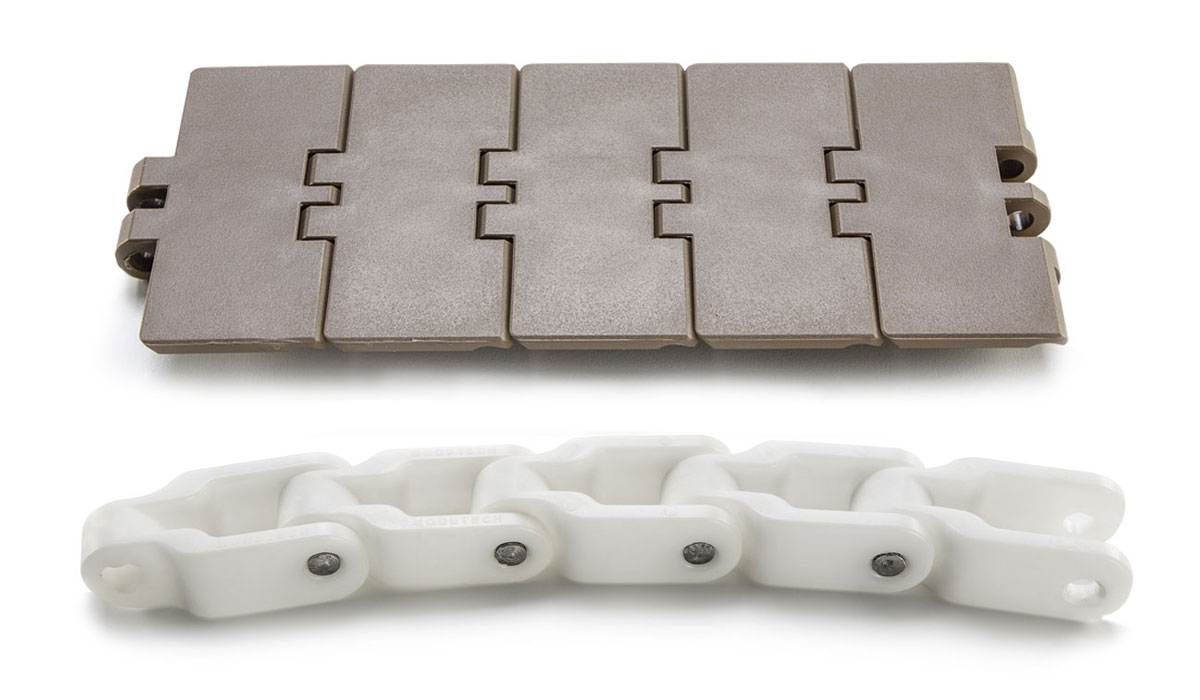
What factors should be considered when selecting modular belts for different industrial applications?
When selecting modular belts for different industrial applications, several factors should be taken into consideration. Choosing the right modular belt requires evaluating the specific requirements of the application and matching them with the characteristics and capabilities of the belt. Here are some key factors to consider:
- Product Characteristics:
The nature of the products being conveyed is an important factor in modular belt selection. Consider the size, weight, shape, and surface properties of the products. For example, if conveying small items or products with irregular shapes, modular belts with smaller module sizes or specialized inserts may be required to ensure proper grip and stability. For heavy or bulky products, belts with higher load-carrying capacities and robust construction may be necessary.
- Operating Environment:
The operating environment plays a significant role in modular belt selection. Consider factors such as temperature, humidity, presence of liquids or chemicals, and exposure to abrasion or impact. Some modular belts are specifically designed to withstand extreme temperatures or harsh chemical environments. For applications where frequent washdowns are required, belts with high resistance to water and cleaning agents are essential. Additionally, if the application involves abrasive materials or heavy impact, belts with reinforced or wear-resistant modules should be considered.
- Conveyor Configuration:
The layout and configuration of the conveyor system should be considered when selecting a modular belt. Evaluate factors such as the presence of curves, inclines or declines, and the need for merging or diverting products. Modular belts offer flexibility and adaptability to different conveyor configurations, but it’s important to select a belt that can smoothly navigate the desired layout without causing product damage or operational issues. Belts with the appropriate module flexibility, pitch, and turning radius should be chosen for the specific conveyor configuration.
- Required Conveyor Performance:
Define the desired performance characteristics of the conveyor system. Consider factors such as speed, acceleration, and deceleration requirements. Modular belts have different capabilities regarding maximum speed and acceleration, and selecting a belt that can meet the performance demands of the application is crucial. Additionally, if the application requires precise indexing, positioning, or accumulation, modular belts with integrated features such as indexing modules or low back-pressure accumulation systems should be considered.
- Maintenance and Cleanability:
Assess the maintenance and cleanability requirements of the modular belt. Consider factors such as ease of cleaning, resistance to contaminants, and the ability to perform routine maintenance tasks. Modular belts with smooth and non-porous surfaces are easier to clean and resistant to bacterial growth. Belts that allow for easy access and module removal simplify maintenance activities, such as cleaning under the belt or replacing damaged modules. Considering the maintenance and cleanability features of the belt can contribute to overall operational efficiency and hygiene in industries with strict sanitation requirements.
- Industry Regulations and Standards:
Ensure that the selected modular belt meets relevant industry regulations and standards. Different industries, such as food processing, pharmaceuticals, and electronics, have specific requirements for material handling equipment. Compliance with regulations related to food safety, hygiene, electrical safety, and chemical resistance may be necessary. Look for modular belts that are certified or compliant with industry-specific standards to ensure they meet the necessary requirements and ensure product quality and safety.
- Budget and Total Cost of Ownership:
Consider the budget and the total cost of ownership over the belt’s lifespan. While upfront costs are important, it’s essential to evaluate the long-term durability, reliability, and maintenance requirements of the modular belt. A belt that offers extended service life, minimal downtime, and low maintenance needs may result in lower overall costs and higher operational efficiency in the long run.
By carefully considering these factors, it becomes possible to select a modular belt that is well-suited for the specific industrial application, ensuring optimal performance, longevity, and cost-effectiveness.
Can you describe the various types and configurations of modular belts available in the market?
Modular belts are available in a wide range of types and configurations to suit different material handling needs and industry requirements. These belts are designed with various features, such as different module shapes, surface patterns, and materials. Here is an overview of the main types and configurations of modular belts available in the market:
- Flat Top Belts:
Flat top belts consist of flat, rectangular modules that interlock to form a continuous conveying surface. They provide a smooth and even transport platform for a wide range of products. Flat top belts are commonly used in industries such as food processing, packaging, and general manufacturing. They are suitable for handling items that require stable support, such as cartons, boxes, and containers.
- Flush Grid Belts:
Flush grid belts feature modules with a grid-like pattern of openings. The grid pattern allows for better airflow, drainage, and easy cleaning. These belts are often used in applications where liquids or debris need to be drained or removed from the conveying surface. Flush grid belts are commonly employed in industries such as food and beverage processing, where hygiene and cleanliness are critical.
- Raised Rib Belts:
Raised rib belts have modules with raised ribs or bars running along the length of the belt. The raised ribs provide additional grip, ensuring positive engagement with the conveyed products. These belts are suitable for inclined or declined conveying applications or when items need extra stability during transport. Raised rib belts are commonly used in industries such as incline/decline transportation, bakery, and meat processing.
- Mold to Width Belts:
Mold to width belts are designed to be easily and precisely customized to fit specific conveyor widths. They consist of modules that can be individually removed or added to achieve the desired belt width. Mold to width belts offer flexibility in configuring conveyor systems and can be adapted to changing production needs. These belts are commonly used in industries that require frequent belt width adjustments or when retrofitting existing conveyor systems.
- Open Grid Belts:
Open grid belts feature a grid-like pattern of open areas between the modules. The open design allows for good airflow and drainage, making these belts suitable for applications where cooling, drying, or drainage is required. Open grid belts are commonly used in industries such as food processing, cooling processes, and drying applications.
- Perforated Belts:
Perforated belts have modules with perforations or holes throughout the surface. The perforations allow for better drainage, airflow, and visibility. These belts are often used in applications where liquids or small particles need to be drained or filtered. Perforated belts are commonly employed in industries such as food processing, sorting, and wastewater treatment.
- Flighted Belts:
Flighted belts have modules with integrated flights or cleats along the conveying surface. The flights help to contain and elevate products during transport, preventing them from sliding or falling off the belt. Flighted belts are used in applications where inclined or vertical conveying is required, such as in bulk handling or incline/decline transportation. They are commonly employed in industries such as agriculture, mining, and bulk material handling.
- Radius Belts:
Radius belts are designed to navigate tight curves or bends in conveyor systems. They feature modules with a curved shape that allows the belt to smoothly transition around corners. Radius belts are commonly used in industries where space is limited or when conveyor systems need to follow complex layouts. They are often found in industries such as packaging, bottling, and material handling in confined spaces.
- Wire Mesh Belts:
Wire mesh belts are composed of metal modules or links, typically made of stainless steel. These belts offer high strength, durability, and excellent heat resistance. Wire mesh belts are used in applications where heavy loads, high temperatures, or strict sanitation requirements are present. They are commonly employed in industries such as automotive manufacturing, heat-treatment processes, and industrial ovens.
These are some of the main types and configurations of modular belts available in the market. Each type offers specific features and benefits, allowing for customized solutions in various industries and material handling applications.


editor by CX 2024-05-03