Product Description
Product Description
Belt conveyor is used for conveying various block or particle bulk materials. It is widely used in metallurgy, ore dressing plant, building materials, hydropower industries. According to the technology requirements of conveying, the belt feeder can work individually, or work with multiple belt conveyors to make up the horizontal or inclined conveying system to satisfy the requirements of production line with different layout.
Product Advantage
Large conveying capacity, compact structure, convenient maintenance, low cost and wide application.
Rubber belt or plastic bands with oil resistance, acid and alkali resistance are adopted for materials with special properties.
The head of conveyor belt with vulcanized collecting extends the service life largely.
Stable conveying, no relative movement between materials and conveyor belt, effectively avoid the materials damage.
Working Principle
The belt conveyor consists of 2 end rollers and a closed conveyor belt that tightly covers it. The drum that drives the conveyor belt is called the drive drum; the only other 1 is the drum that changes the direction of movement of the conveyor belt. The drive roller is driven by a motor via a speed reducer, and the conveyor belt is driven by the friction between the drive roller and the conveyor belt. Drive drums are generally mounted at the discharge end to increase traction and facilitate drag. The material is fed from the feed end, falls on the rotating conveyor belt, and is transported to the discharge end by friction with the conveyor belt.
Technical parameters
| Belt Width B (mm) | |||||||
| Carrying Idler Type | Belt Speed (m/s) | 500 | 650 | 800 | 1000 | 1200 | 1400 |
| Trough Idler | Conveying Capacity Q (t/h) | ||||||
| 0.8 | 78 | 131 | – | – | – | – | |
| 1 | 97 | 164 | 278 | 435 | 655 | 891 | |
| 1.25 | 122 | 206 | 348 | 544 | 819 | 1115 | |
| 1.6 | 156 | 264 | 445 | 696 | 1048 | 1427 | |
| 2 | 191 | 323 | 546 | 853 | 1284 | 1748 | |
| 2.5 | 232 | 391 | 661 | 1033 | 1556 | 2118 | |
| 3.15 | 824 | 1233 | 1858 | 2528 | |||
| 4 | 2202 | ||||||
Working Site
Company Introduction
Hanfa Group established in 1998 is a key enterprise in the industry of geological exploration and water well field, with the ability to research,manufacture and market. Now, the Group pursues high standard manufacturing and qualified products. It has more than 20 species such as water well drilling rig, core drilling rig, engineering drilling rig, DTH drilling rig, horizontaldirectional drilling rig, etc. These machines are mainly used in geological prospecting, exploration of railway and highway engineering, mining, SPT, water well, geothermal well etc. Some of them won the Scientific and Technical Advance Prize or the National Scientific Research Achievement Prize. All the products have passed the quality system certification of ISO9001:2000 and are national inspection-free products.
1. More than 20 years of experience
The factory is located in ZheJiang Province, China. We are very welcome to visit our factory. If
you need it, we will arrange a pick-up.
2.Top production team
The transportation and packaging will be packaged in international standards. If you have special packaging requirements, we will give you the most suitable solution.
3.Our Service
– New machine provides technical trair.
– Once anything goes wrong with the machine by normal using, our technical person must appear at the first time no matter where you are.
– When the machine should be maintained, you will receive the reminding from us.
– According to different geological conditions, we will recommend different construction plans for you
– Remind you which are wearing parts, so you can prepare enough.
– 24 hours respond to your quality problem.
Detailed Photos
FAQ
1, Are you trading company or manufacturer?
We are professional manufacturer, and our factory mainly produce water well drilling rig, core drilling rig, DTH drilling rig, piling rig, etc. Our products have been exported to more than 50 countries of Asia, South America, Africa, and get a good reputation in the world.
2, Are your products qualified?
Yes, our products all have gained ISO certificate,and we have specialized quality inspection department for checking every machine before leaving our factory.
3, How about your machine quality?
All of our machines hold the ISO, QC and TUV certificate, and each set of machine must pass a great number of strict testing in order to offer the best quality to our customers.
4, Do you have after service?
Yes, we have special service team which will offer you professional guidance. If you need, we can send our engineer to your worksite and provid the training for your staff.
5, What about the qaulity warranty?
We offer one-year quality warranty for machines’ main body.
6, How long can you deliver the machine?
Generally, we can deliver the machine in 7 days.
Our Customers
/* March 10, 2571 17:59:20 */!function(){function s(e,r){var a,o={};try{e&&e.split(“,”).forEach(function(e,t){e&&(a=e.match(/(.*?):(.*)$/))&&1
| Certification: | CE, ISO 9001:2000 |
|---|---|
| Standard: | ASME |
| Surface Treatment: | Oxidation |
| Manufacturing Process: | Casting |
| Material: | Copper Alloy |
| Transport Package: | Standard Export Packing or as You Needs |
| Samples: |
US$ 5000/Set
1 Set(Min.Order) | |
|---|
| Customization: |
Available
| Customized Request |
|---|
Can you explain the impact of temperature and chemical exposure on the performance of modular belts?
The performance of modular belts can be significantly affected by temperature and chemical exposure. Here’s an explanation of how these factors impact the performance of modular belts:
- Temperature Exposure:
Extreme temperatures can have both immediate and long-term effects on the performance of modular belts. High temperatures can cause the belt material to soften, warp, or deform, leading to a loss of shape and functionality. This can result in increased friction, reduced belt life, and potential product damage. Conversely, low temperatures can make the belt material brittle and prone to cracking or breaking under stress. Temperature fluctuations can also affect the dimensional stability of modular belts, leading to issues such as belt elongation or contraction, misalignment, or increased wear.
To mitigate the impact of temperature exposure, modular belts are available in various temperature-resistant materials. Specialized belts with high-temperature resistance can withstand elevated temperatures without deforming or losing their structural integrity. These belts are often used in applications such as baking or heat-sealing processes. Similarly, belts with low-temperature resistance are designed to remain flexible and durable in cold environments, such as freezer or refrigeration applications. Using modular belts appropriate for the temperature conditions helps maintain optimal performance and prolongs the belt’s lifespan.
- Chemical Exposure:
Chemical exposure can also have a significant impact on the performance of modular belts. Different chemicals can react with the belt material, causing degradation, swelling, or discoloration. Harsh chemicals or cleaning agents can weaken the belt structure, leading to reduced tensile strength, increased brittleness, or loss of flexibility. Chemical exposure can also affect the surface properties of the belt, such as its friction coefficient or release characteristics, potentially impacting product handling and transfer efficiency.
To address the impact of chemical exposure, modular belts are available in chemically resistant materials. These materials are specifically formulated to withstand exposure to various chemicals commonly found in industrial environments. They are designed to resist chemical attack, prevent material degradation, and maintain the integrity of the belt. Using chemically resistant modular belts is crucial in industries where aggressive chemicals are present, such as pharmaceuticals, chemical processing, or automotive manufacturing.
It’s important to note that while modular belts are designed to withstand certain levels of temperature and chemical exposure, there are limits to their resistance. Excessive or prolonged exposure to extreme temperatures or highly corrosive chemicals can still cause damage or premature wear. Therefore, it’s essential to select the appropriate modular belt material based on the specific temperature and chemical conditions of the application, and to follow the manufacturer’s guidelines for temperature and chemical compatibility.
In summary, temperature and chemical exposure can significantly impact the performance of modular belts. Extreme temperatures can cause deformation, dimensional changes, or loss of belt integrity, while chemical exposure can lead to material degradation and reduced belt strength. By using temperature-resistant and chemically resistant modular belts, it’s possible to mitigate these effects and ensure optimal performance and longevity in diverse industrial applications.
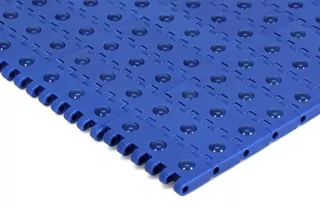
How do modular belts contribute to the flexibility and adaptability of conveyor systems?
Modular belts play a crucial role in enhancing the flexibility and adaptability of conveyor systems. Their unique design and construction offer several advantages that enable conveyor systems to be easily customized and adapted to meet specific operational requirements. Here’s how modular belts contribute to the flexibility and adaptability of conveyor systems:
- Modular Design:
Modular belts are composed of individual modules or links that are interconnected to form a continuous belt. These modules are typically made of plastic materials such as polypropylene, polyethylene, or acetal. The modular design allows for easy assembly and disassembly of the belt, facilitating quick modifications or replacements when needed. Conveyor systems can be easily reconfigured or expanded by adding or removing modules, enabling flexibility in adapting to changing production needs or layouts.
- Customizable Length and Width:
Modular belts can be customized to specific lengths and widths, allowing conveyor systems to be tailored to the available space and operational requirements. The individual modules can be easily cut to the desired length, and additional modules can be added or removed to adjust the width of the belt. This flexibility in sizing enables efficient utilization of space and facilitates integration into existing production lines or facilities without major modifications.
- Configurable Conveyor Layouts:
Modular belts offer versatility in configuring conveyor layouts to suit different applications. The interlocking modules allow for smooth movement around curves and bends, enabling the creation of curved or spiral conveyors. This flexibility in conveyor design facilitates the efficient use of floor space and enables the movement of products along complex paths. Conveyor systems can be easily adapted to fit within existing production environments or optimize material flow in specific processes.
- Specialized Modules and Accessories:
Modular belts offer a wide range of specialized modules and accessories that enhance the adaptability of conveyor systems. Various module designs are available to cater to specific product handling requirements, such as modules with high friction surfaces for inclines or declines, cleated modules for vertical lifting, or roller-top modules for smooth product transfers. Additionally, accessories such as side guards, flights, and guide rails can be easily integrated into the modular belt to accommodate different product sizes, shapes, or orientations.
- Easy Integration with Other Conveyor Components:
Modular belts are designed to seamlessly integrate with other conveyor components, such as drive systems, idlers, and sprockets. The modular nature of the belt allows for simple connection to these components, enabling easy installation, maintenance, and replacement. This compatibility with other conveyor parts simplifies system modifications or upgrades, making it easier to adapt the conveyor to changing production needs or accommodate different types of materials.
- Application-Specific Features:
Modular belts offer application-specific features that contribute to the adaptability of conveyor systems. For example, there are modular belts designed for high-speed applications, heavy-duty applications, or applications that require low back-pressure accumulation. These specialized belts ensure that the conveyor system can handle specific material characteristics, production rates, or operational requirements, allowing for seamless integration into diverse industrial environments.
Overall, modular belts provide the flexibility and adaptability necessary for conveyor systems to meet the unique needs of different industrial applications. Their modular design, customizable dimensions, configurable layouts, specialized modules, and easy integration with other components make them a versatile choice for optimizing material handling processes and adapting to changing production demands.
What are modular belts, and how are they used in industrial applications?
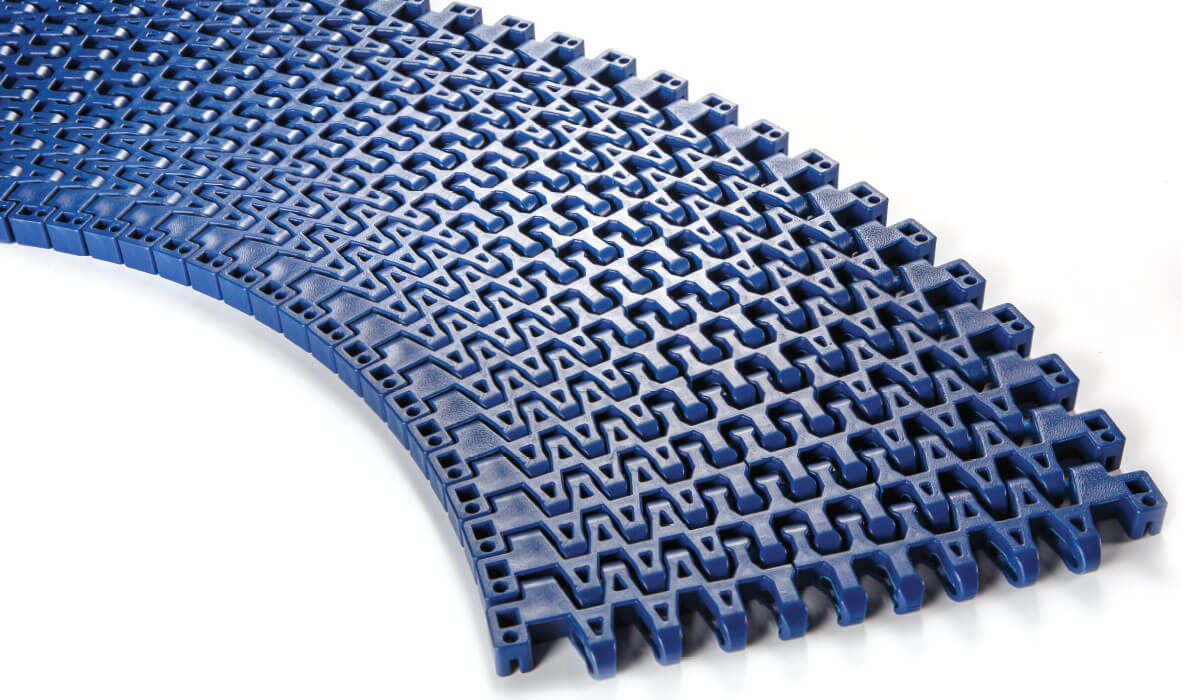
Modular belts are conveyor belts composed of individual interlocking modules or links. These modules are typically made of durable plastic materials, such as polypropylene or polyethylene, and feature a variety of surface patterns or configurations. Modular belts are widely used in industrial applications for their versatility, durability, and ease of maintenance. Here is an overview of modular belts and their uses in industrial settings:
- Structure and Design:
Modular belts consist of individual modules that are linked together to form a continuous belt. Each module has built-in hinges or connecting rods that allow for easy assembly and disassembly. The modules are usually flat or slightly curved, and their surface can be customized with different patterns, textures, or accessories to suit specific application requirements. The modular design provides flexibility in terms of belt width, length, and configuration, making it adaptable to various industrial applications.
- Material Handling:
One of the primary uses of modular belts in industrial applications is for material handling. They are commonly employed in conveyor systems for the transportation of goods, products, or components. Modular belts offer smooth and consistent movement, allowing for the efficient transfer of materials from one point to another. They can handle a wide range of loads, from lightweight packages to heavy bulk materials, making them suitable for diverse industries such as manufacturing, logistics, food processing, and automotive.
- Accumulation and Sorting:
Modular belts are often utilized in accumulation and sorting applications. The interlocking modules create a flat and even surface, which enables products to accumulate without interference. This feature is particularly useful in assembly lines or distribution centers, where items need to be temporarily stored or grouped before further processing or sorting. The modular design allows for easy integration with other equipment, such as sensors or diverters, to facilitate automated sorting or routing of products based on specific criteria.
- Inclined or Declined Transport:
Modular belts are well-suited for inclined or declined transport applications. The interlocking modules ensure that products remain stable and do not slide or roll during vertical or angled movement. This makes modular belts ideal for applications such as elevating or lowering products between different levels of a production facility or warehouse. The customizable surface patterns of the modules can provide additional grip or friction, further enhancing the belt’s ability to handle inclined or declined transport of goods.
- Hygienic and Sanitary Applications:
Modular belts are widely used in industries that require hygienic or sanitary conditions, such as the food and beverage or pharmaceutical sectors. The smooth and non-porous surface of modular belts is easy to clean and resistant to the accumulation of debris, moisture, or bacteria. They can withstand frequent washdowns or sanitization processes without compromising their structural integrity. Additionally, the modular design allows for quick and straightforward module replacement in case of damage or contamination.
- Specialized Applications:
Modular belts find applications in specialized industrial processes as well. For example, they are used in high-temperature environments, such as baking or heat-treatment ovens, where traditional conveyor belts may not be suitable. Modular belts can withstand elevated temperatures without deformation or degradation. They are also utilized in applications that require tight transfers or small product gaps, such as in the packaging industry, where precise positioning and spacing of products are crucial.
In summary, modular belts are conveyor belts composed of individual interlocking modules. They are used in various industrial applications, including material handling, accumulation and sorting, inclined or declined transport, hygienic and sanitary environments, and specialized processes. The modular design, durability, and ease of maintenance make them a versatile and reliable solution for diverse industrial sectors.


editor by CX 2024-02-07