Open Grid Plastic Modular Belts
Use this family as a selection direction, then confirm the actual pitch, face, width and conveyor interface.
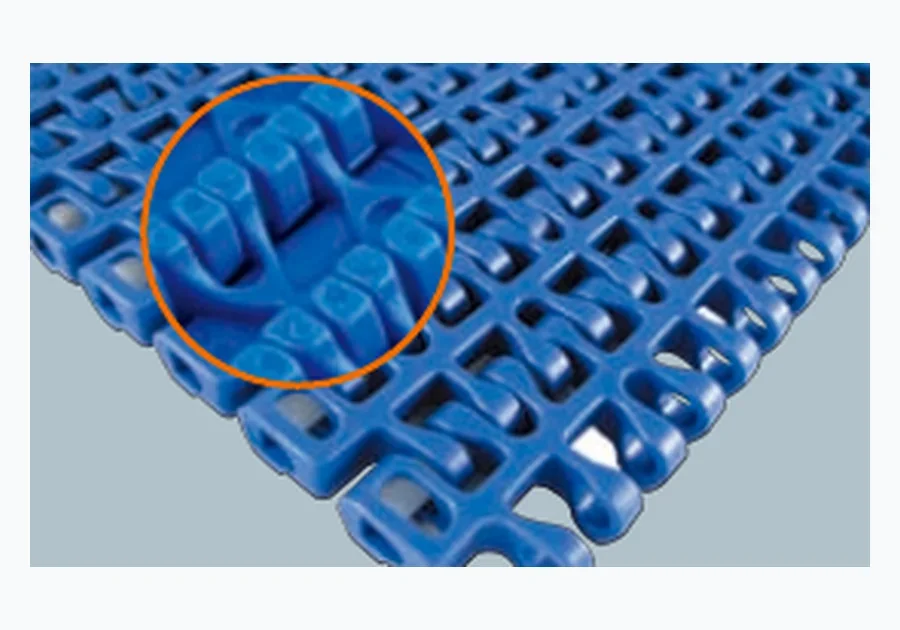
Washing and draining duty makes open area visible, but percentage opening is only one part of the design. The belt still has to support the smallest product, release water in the intended direction, cross transfers without tipping and work with the existing drive and return path.
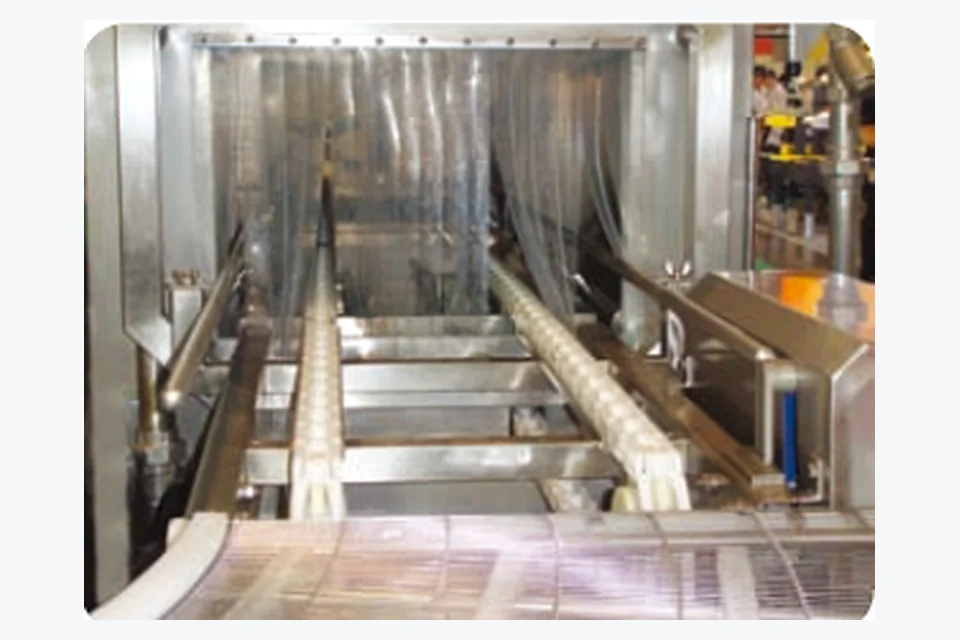

A useful wash-line review follows the water. Identify where spray or immersion occurs, where water must escape, whether debris needs to pass through, where the product is inspected and how the line transfers into the next operation. A high-open-area face may be excellent in the wash zone and unnecessary at the packing discharge.
For Modular Belts for Washing & Draining, the conveyor should be described as a specific process position rather than only by a belt name. That gives a new-design or replacement RFQ enough context to distinguish support, opening, path and drive needs.
| Input | What to describe |
|---|---|
| 製品のフットプリント | Smallest width/diameter and whether product is soft or irregular |
| Water duty | Spray, flood, immersion or residual carryover |
| Drainage target | Fast dewatering, general drainage or airflow after wash |
| Debris | Whether particles should pass through or remain on the belt |
| Transfer | Gap and edge geometry at infeed/outfeed |
| Cleaning | Cleaning agent, frequency and required project documentation |
Too much opening can reduce support or catch small product. Too little opening can retain water, slow dewatering or carry debris farther down the line. Poor transfer geometry can undo an otherwise correct open-area choice by creating a drop or pinch point at the discharge.
For Modular Belts for Washing & Draining, solve product support, process opening, conveyor path and drive compatibility first. Material and project documentation can then be confirmed for the selected configuration.
Compare the product footprint against the actual opening pattern first. Then use the open-area reference values to narrow the family. Straight-running reference examples include 14%, 16%, 28%, 29%, 34%, 35% and 38%; radius families include 47%, 52% and 55% examples. These figures are useful selection references, not universal performance ratings.
Pitch influences module size, drive geometry and transfer behaviour. Where wash lines also handle smaller pieces, a finer pitch can be worth comparing; larger-pitch families may be suitable when transfer size is less critical.
More open area is not automatically more effective. Water-release direction, product bridging, belt thickness and the downstream conveyor all matter. A good RFQ states what must drain and how quickly, rather than simply requesting the highest open percentage.
If washing continues through a horizontal curve, do not switch to a straight belt simply because its open area is similar. The curve needs a radius family with the correct guide and width relationship.
| Curve input | Why it matters |
|---|---|
| Belt width | Radius capability is related to the selected family and width |
| Inside radius | Defines the turn requirement |
| Curve angle | Sets total path through the guide system |
| Guide profile | Controls location and wear through the curve |
| Drive position | Changes how the belt enters/leaves the curve |
| 製品のフットプリント | Checks stability and support through the turn |
Use this family as a selection direction, then confirm the actual pitch, face, width and conveyor interface.
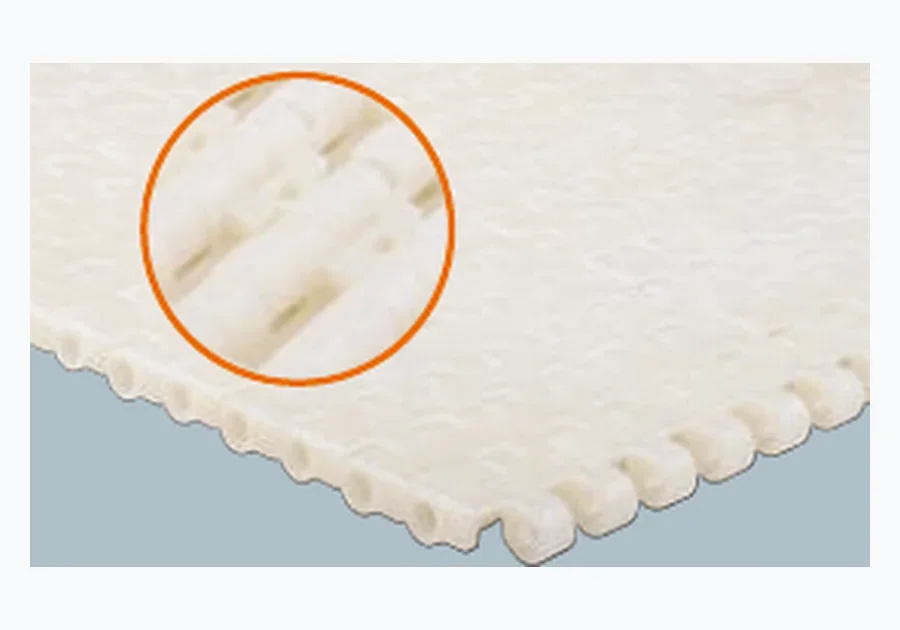
Use this family as a selection direction, then confirm the actual pitch, face, width and conveyor interface.

Use this family as a selection direction, then confirm the actual pitch, face, width and conveyor interface.
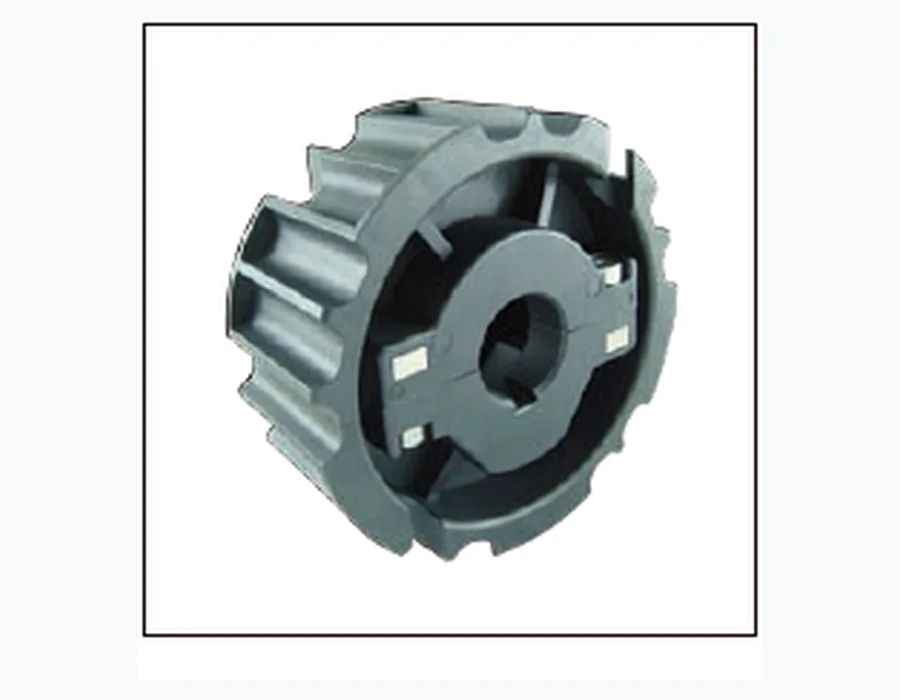
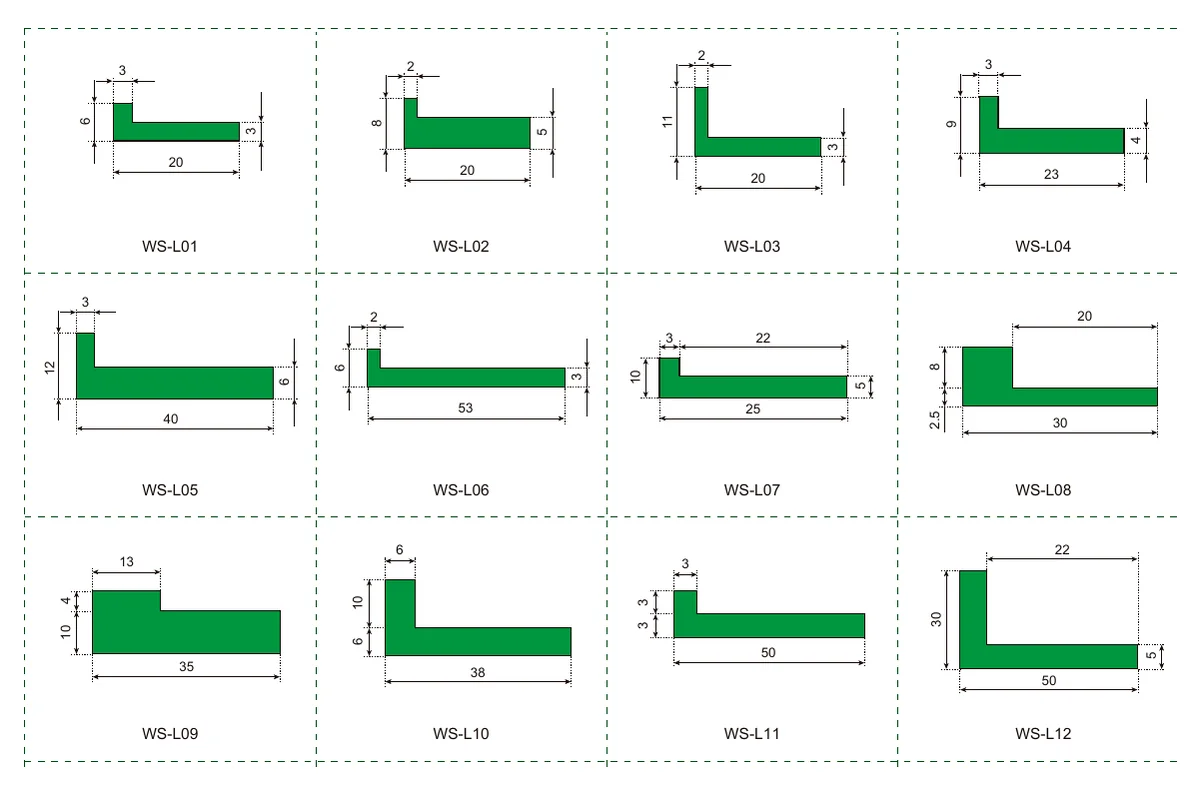
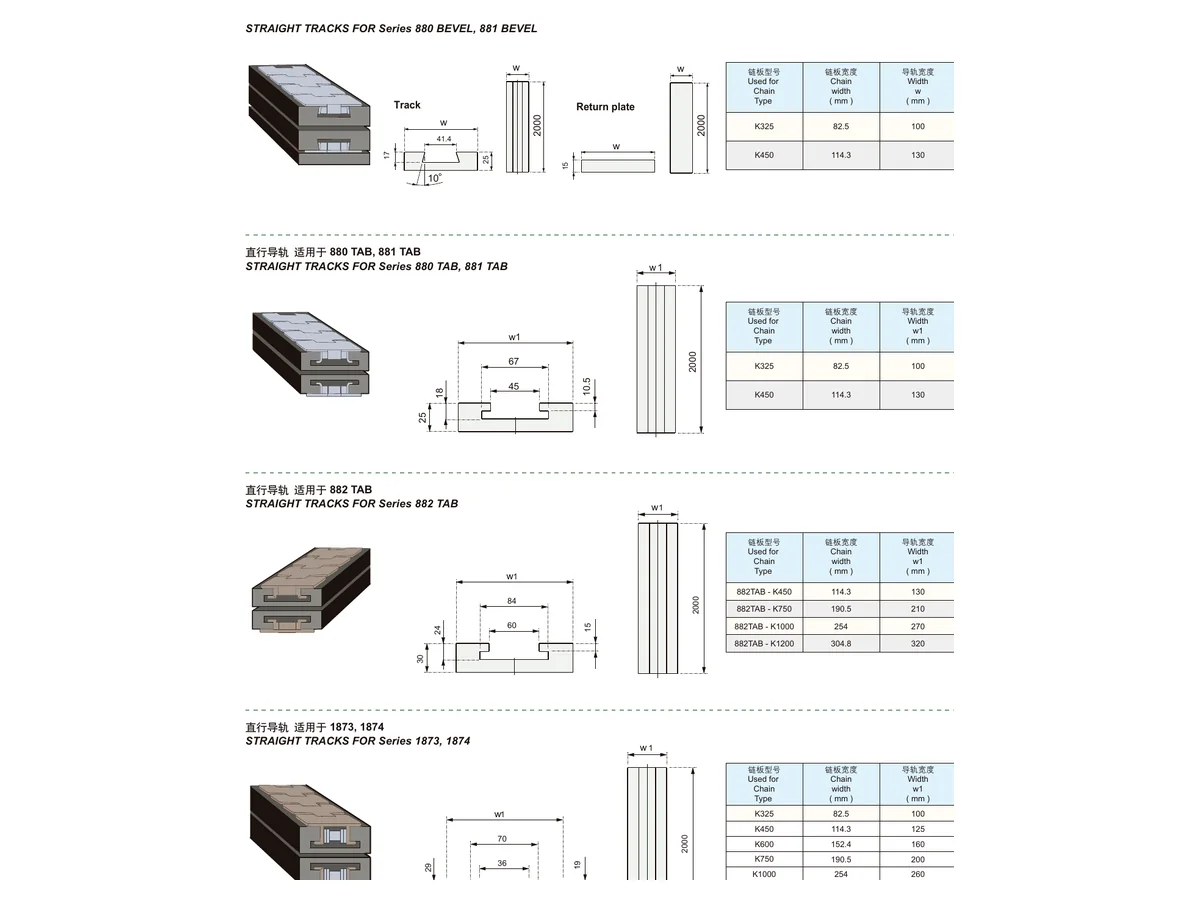
On a modular belts for washing & draining conveyor, sprockets, pins, support strips and guide profiles belong in the review whenever they affect the process or refurbishment scope. Pitch is only one drive input; underside geometry and tooth engagement still have to match. Measure wear-strip and guide sections wherever they locate the belt or product.
Check openings for process build-up, verify pins and hinges remain secure, inspect wear-strip contact and make sure water does not create unintended tracking or debris zones around the return conveyor.
For a new modular belts for washing & draining installation, verify belt direction or orientation where applicable, sprocket position and engagement, guide clearance, return support and transfer alignment. For replacement work in this duty, compare the old wear pattern with the surrounding conveyor before assuming the belt itself caused the problem.
| Area | Send |
|---|---|
| Application | Process step and conveyed product |
| Belt geometry | Pitch if known, width, face/open area and overall length/centre distance |
| Conveyor path | Straight/curve, inside radius and transfer points |
| ドライブ | Sprocket photos/drawing, tooth count, shaft/bore and spacing |
| 義務 | Load, speed, wet/dry condition, cleaning and relevant environment |
| Commercial | Quantity, destination, project stage and requested documentation |
Choose enough opening for the process while keeping adequate support under the smallest product. Send product dimensions and the required drainage function.
Do not assume so. Pitch alone does not prove underside geometry or sprocket compatibility.
No. Clear photos, pitch, width, opening pattern and sprocket engagement can start the replacement review.
Send the information already available for the modular belts for washing & draining section. A drawing is useful, but a clear photo set plus a few measured dimensions can also start the configuration review.