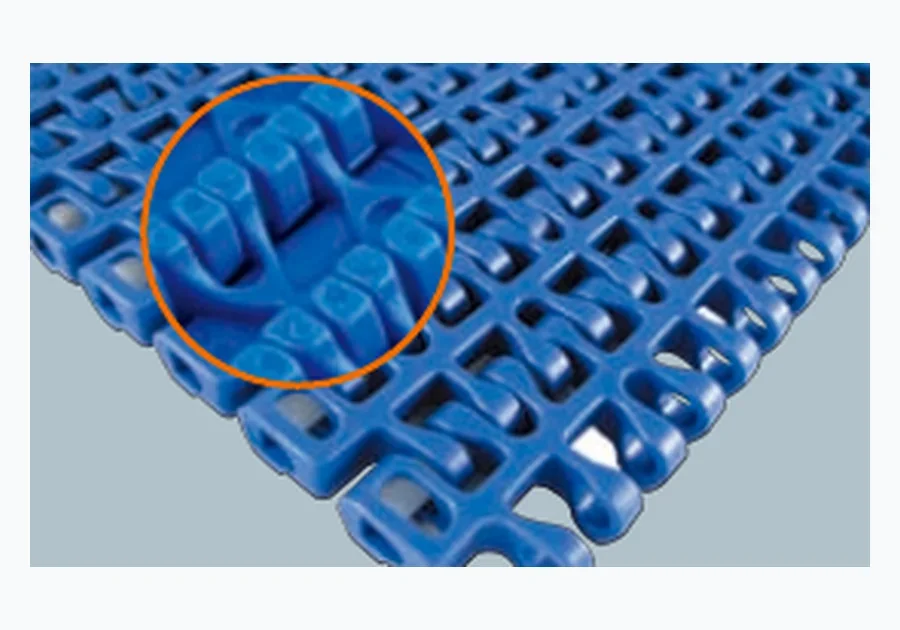
Open Grid Plastic Modular Belts
Use this family as a selection direction, then confirm the actual pitch, face, width and conveyor interface.
Bakery conveyors can handle soft warm product, trays, wrapped packs or cases. Cooling sections need airflow, but the belt still has to support the product without excessive marking or transfer disturbance. Spiral and horizontal curves introduce a separate radius geometry decision.
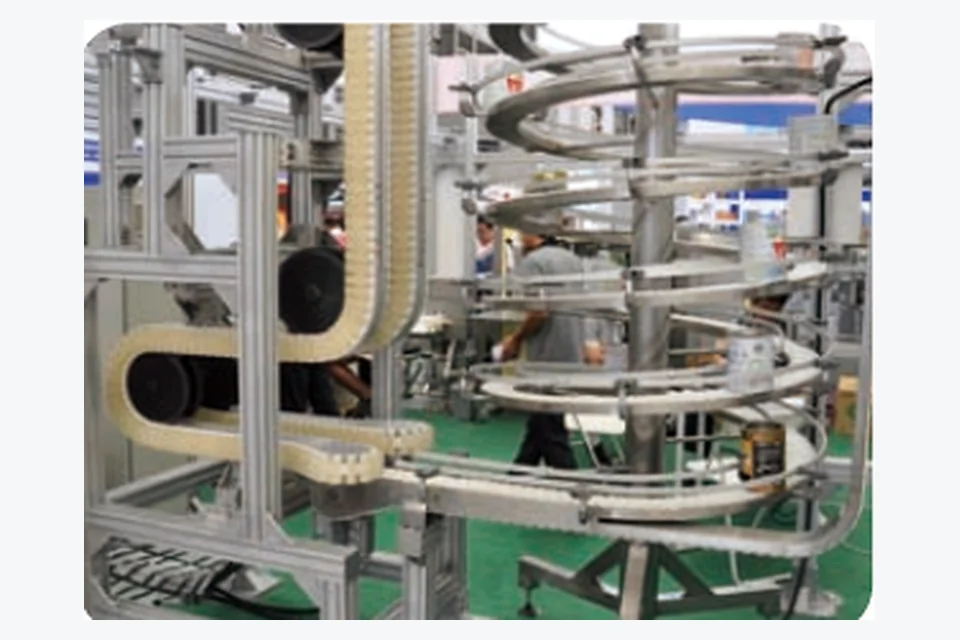
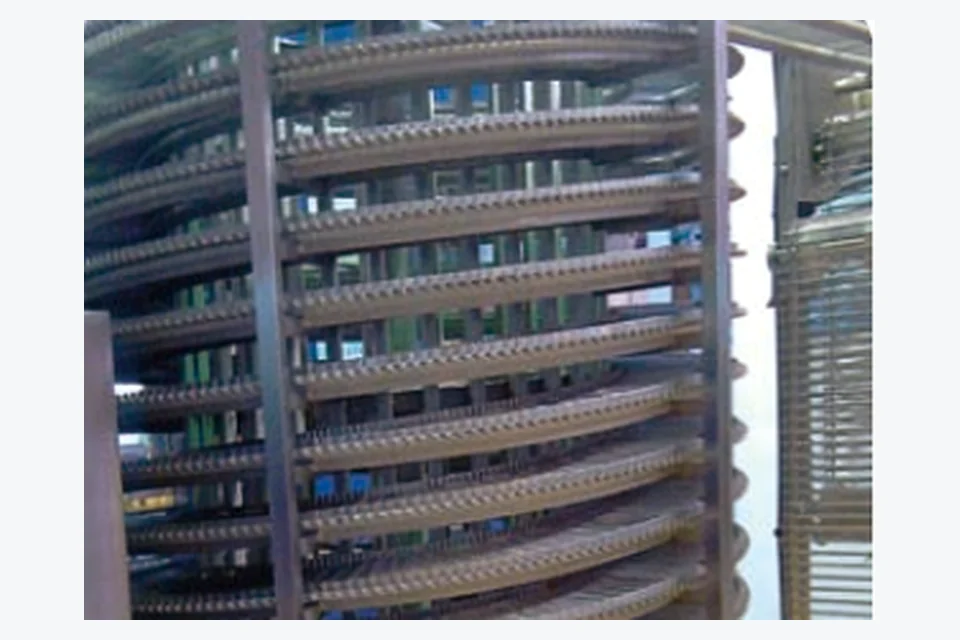
A bakery line often changes duty from oven discharge to cooling, inspection, wrapping and case packing. The open-area requirement is usually strongest in the cooling section, while downstream packaging may prefer a flatter support surface. Treat the sections independently when the process goals differ.
For Modular Belts for Bakery & Cooling Lines, the conveyor should be described as a specific process position rather than only by a belt name. That gives a new-design or replacement RFQ enough context to distinguish support, opening, path and drive needs.
| Input | What to describe |
|---|---|
| Product | Bread, roll, pastry, snack, tray or package |
| Product state | Warm/soft, cooled or packaged |
| Cooling | Ambient, forced-air or spiral cooling |
| Transfer | Gap, drop and product stability |
| パス | Straight, curve, incline or spiral |
| Cleaning | Crumb release and cleaning routine |
Soft product can deform or mark if the support pattern is too aggressive. Crumbs can accumulate where the belt, wear strip and return path are poorly coordinated. Spiral or curve belts can also suffer if the width/radius relationship is ignored during replacement.
For Modular Belts for Bakery & Cooling Lines, solve product support, process opening, conveyor path and drive compatibility first. Material and project documentation can then be confirmed for the selected configuration.
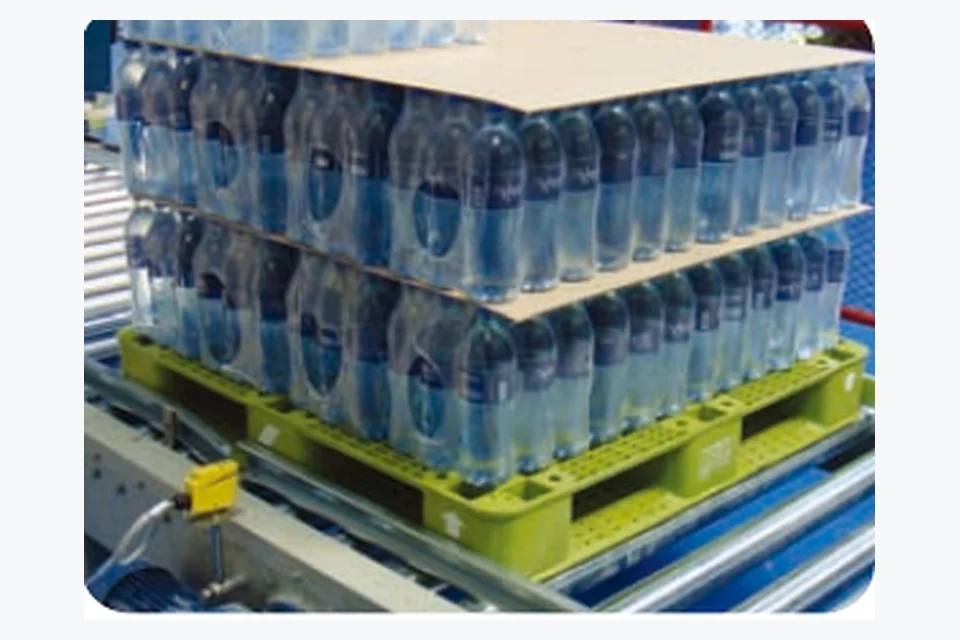
Compare flat and open-grid faces around the product state. Warm, soft items may need a more supportive pattern even when cooling is required. Once the product is wrapped or cased, stable flat support often becomes more important than through-belt airflow.
Fine-pitch families can help at delicate transfers, while a larger pitch may be acceptable on long cooling runs if product support remains sufficient. Transfer diameter and product length should be considered together.
Use open area to achieve a process function, not as a marketing number. The 28–38% straight-running reference examples can be useful comparison points for cooling, but the actual pattern and product footprint should be reviewed.
For spirals or curves, provide inside radius, belt width, curve/spiral layout, guide track and drive position. The radius reference families at 25 and 25.4 mm pitch are starting points only.
| Curve input | Why it matters |
|---|---|
| Belt width | Radius capability is related to the selected family and width |
| Inside radius | Defines the turn requirement |
| Curve angle | Sets total path through the guide system |
| Guide profile | Controls location and wear through the curve |
| Drive position | Changes how the belt enters/leaves the curve |
| 製品のフットプリント | Checks stability and support through the turn |
Use this family as a selection direction, then confirm the actual pitch, face, width and conveyor interface.

Use this family as a selection direction, then confirm the actual pitch, face, width and conveyor interface.
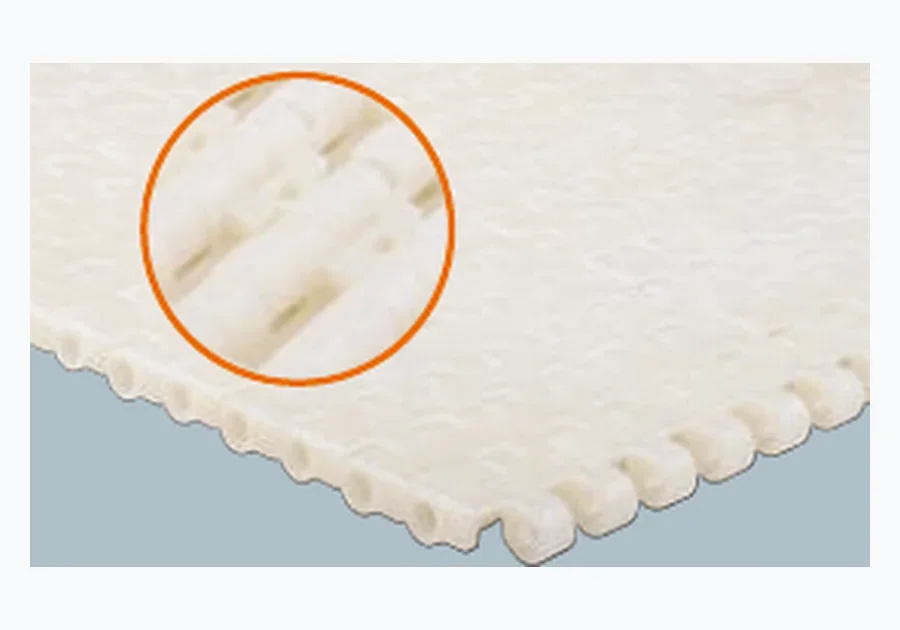
Use this family as a selection direction, then confirm the actual pitch, face, width and conveyor interface.
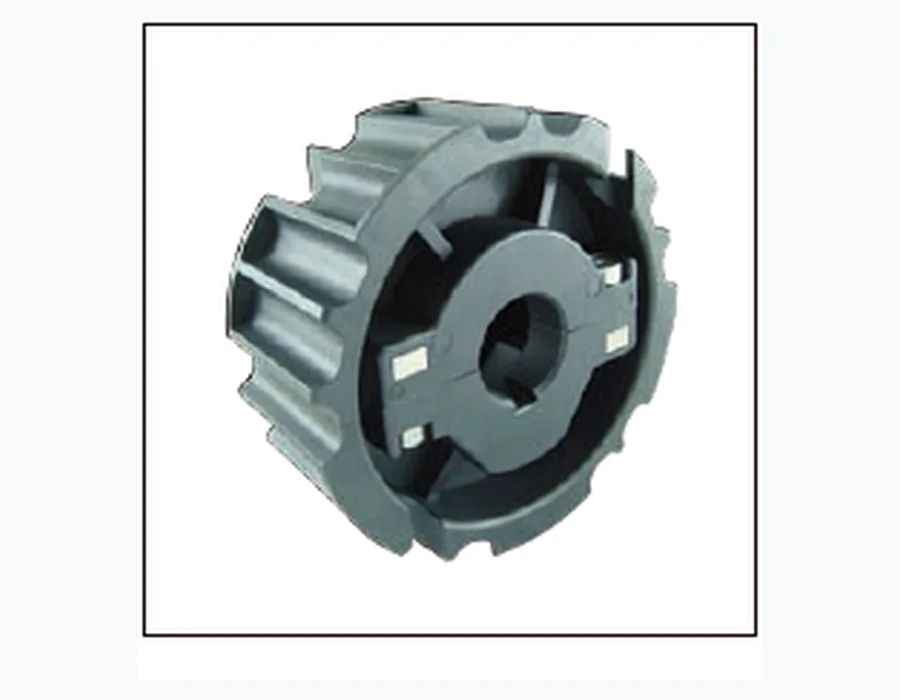
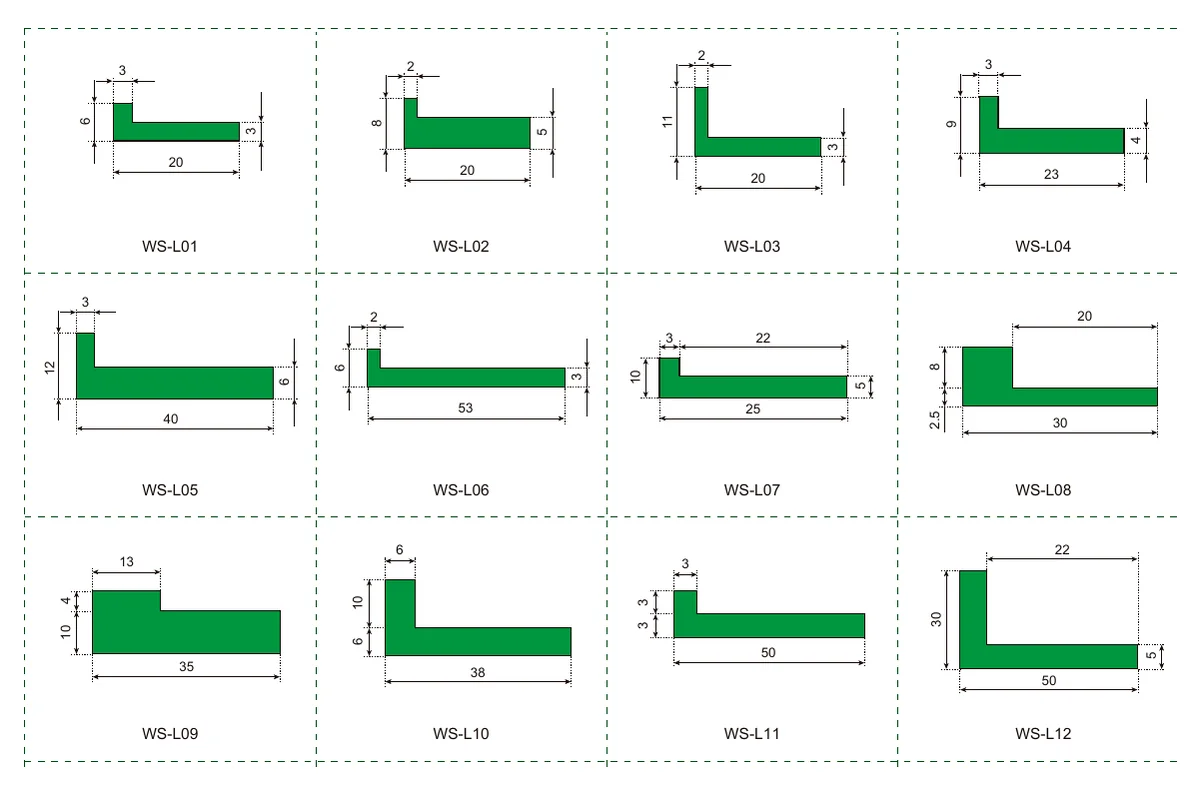
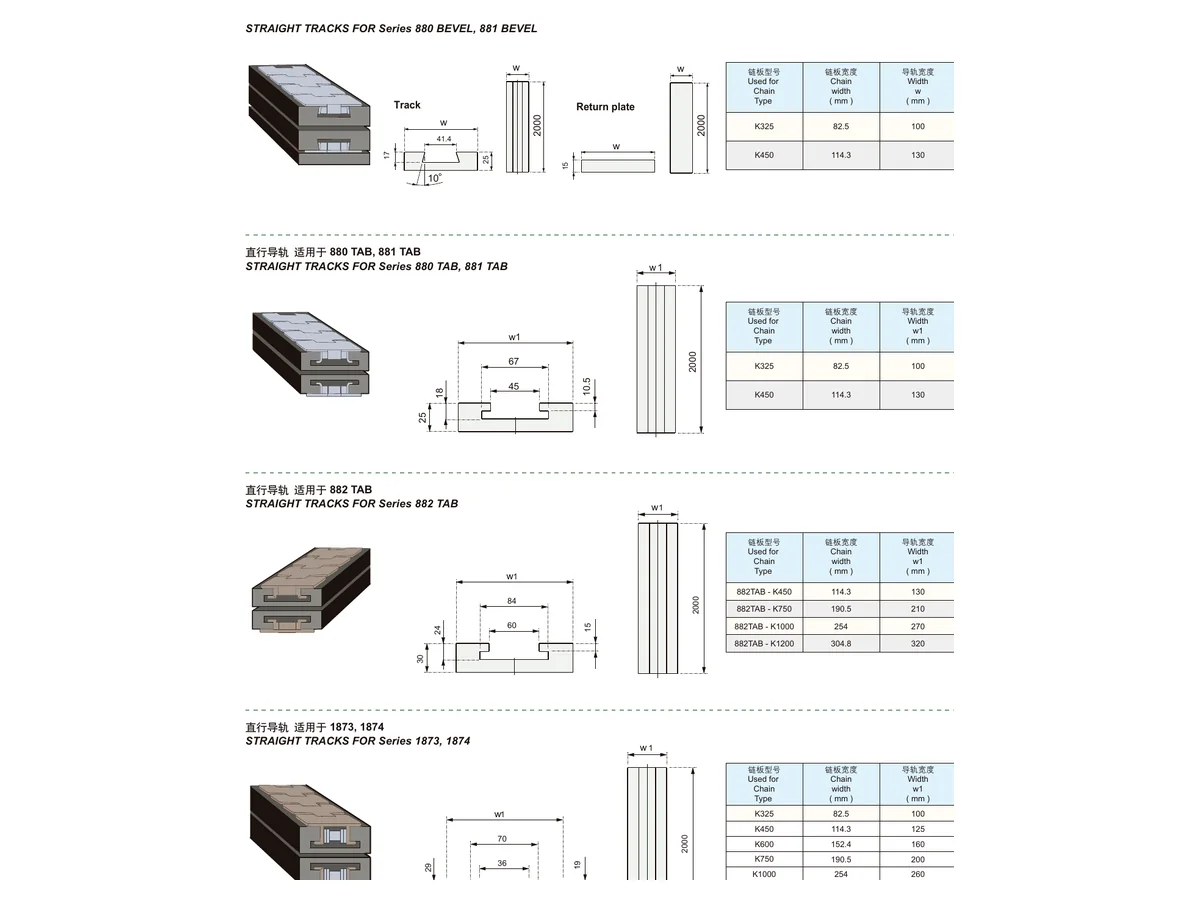
On a modular belts for bakery & cooling lines conveyor, sprockets, pins, support strips and guide profiles belong in the review whenever they affect the process or refurbishment scope. Pitch is only one drive input; underside geometry and tooth engagement still have to match. Measure wear-strip and guide sections wherever they locate the belt or product.
Watch crumb accumulation, hinge freedom, guide wear and sprocket engagement. A predictable cleaning plan and accessible return path can be as important to uptime as the nominal belt choice.
For a new modular belts for bakery & cooling lines installation, verify belt direction or orientation where applicable, sprocket position and engagement, guide clearance, return support and transfer alignment. For replacement work in this duty, compare the old wear pattern with the surrounding conveyor before assuming the belt itself caused the problem.
| Area | Send |
|---|---|
| Application | Process step and conveyed product |
| ベルトの形状 | Pitch if known, width, face/open area and overall length/centre distance |
| Conveyor path | Straight/curve, inside radius and transfer points |
| ドライブ | Sprocket photos/drawing, tooth count, shaft/bore and spacing |
| 義務 | Load, speed, wet/dry condition, cleaning and relevant environment |
| Commercial | Quantity, destination, project stage and requested documentation |
No. Airflow matters, but product support and transfer behaviour can justify a closer face in some sections.
Not by assumption. Spiral/curve duty needs a side-flexing family and confirmed geometry.
Show the top face, underside, hinge/pin, edge, sprocket engagement and the curve or spiral guide path.
Send the information already available for the modular belts for bakery & cooling lines section. A drawing is useful, but a clear photo set plus a few measured dimensions can also start the configuration review.