Product Description
Product Description
As a type of efficient conveyor system, spirals could utilize the cubical space optimized. In this way, a lot of space and labor cost could be saved.
It’s widely applied to cooling, fermenting and quick freezing in food industry, such as the quick freezing of segmented meat, seafood, poultry etc; the proofing, cooling of bread, hamburg and all kinds of cakes. The spiral turning radius could be 200 mm to 960mm. The power is 380V/3.7KW. Also we could offer customized sizes and power source.
Product Parameters
| Specifications | |
| Materiale | SUS304, SUS316 |
| Belt width (mm) | 275-1000 |
| Wire diameter(mm) | 1.0, 1.2, 1.5 |
| Pitch(mm) | 19.05, 30.5, 31.75,38.1 |
| Spiral pitch (mm) | 5 and up |
Detailed Photos
Packaging & Shipping
Certification & Show
Company Profile
Established in 2000, Shangde Mesh Belt Machinery Co., Ltd locates in HangZhou City, ZheJiang province. With quick access to ZheJiang and HangZhou Port, Shangde can deliver the products to you on time. HangZhou international airport is even more closer to our factory, so we are happy and convenient to pick you up at the airport when you visit our factory!
With a wide range of production series, we could satisfy you with all types of different production varieties of conveyor industry: stainless steel belt series including spiral mesh belt, chain-driven mesh belt, plate belt, self-stacking belt, balanced weave belt, compound balanced weave belt, eye link belt, flat wire belt, flat flex belt, and flat top chain; conveyor series including flat conveyor, turning conveyor, inclined conveyor and spiral conveyor.
Our products are widely applied to the food processing industry, electronics industry, forging industry and heat treatment furnace, and so on. Especially the proofing, baking, frying, and cooling of bread, biscuits, and cookies; sorting, washing, drying, and packing of fruits, vegetables, and nuts; segmenting, quick freezing and packing of meat products and seafood.
With a well-trained R&D team, we are capable of providing our clients with the best available solutions once we know your specified applications. What you need to do is only tell us your applications and wait for reasonable solutions.
Under the instruction of the ISO quality system, our unique quality control system has been integrated gradually inside Shangde. Under this system, both the self-inspection of the production department and the supervision of the quality control department are emphasized.
The production line is the main force of quality control, and the quality control department is a strong guarantee at the same time. Raw material check, initial parts inspection, process control, and finished product inspection are performed well for all the products. Especially finished products will be 100% checked piece by piece to ensure that no defective products will be delivered to you.
With the service philosophy: “all problems end at Shangde.” We offer considerate customer service to you. We will be here 24 hours a day to serve you.
Presently, our market covers not only the domestic market but also southeast Asia, the Middle East, Australia, and America, etc. Presently, 200,000 meters of all kinds of mesh belt and 800 sets of conveyors are produced annually to satisfy you on quick delivery.
Shangde is always on the way to improve ourselves on quality and service. We sincerely hope to have the chance to create a bright future together with you!
FAQ
1. Are you manufacuturer ?
Yes, we are manufacturer and solution provider of conveyor system with 20 year’s experience.
2. What’s the leading time of your products ?
For belt, it always take about 7-15 days; for conveyors, it takes around 30 days.
3. How long is the guarantee ?
We promise 1 year gurantee for our products under normal service condition.
4. What’s your main market.
Till now, we had sold our belt and conveyor system to Europe, Southeast Asia, North America, Africa and middleeast etc.
/* March 10, 2571 17:59:20 */!function(){function s(e,r){var a,o={};try{e&&e.split(“,”).forEach(function(e,t){e&&(a=e.match(/(.*?):(.*)$/))&&1
| After-sales Service: | Online Technical Support |
|---|---|
| Warranty: | 1 Year After Shipment |
| Structure: | Conveyor System |
| Customization: |
Available
| Customized Request |
|---|
.shipping-cost-tm .tm-status-off{background: none;padding:0;color: #1470cc}
|
Shipping Cost:
Estimated freight per unit. |
about shipping cost and estimated delivery time. |
|---|
| Payment Method: |
|
|---|---|
|
Initial Payment Full Payment |
| Currency: | US$ |
|---|
| Return&refunds: | You can apply for a refund up to 30 days after receipt of the products. |
|---|
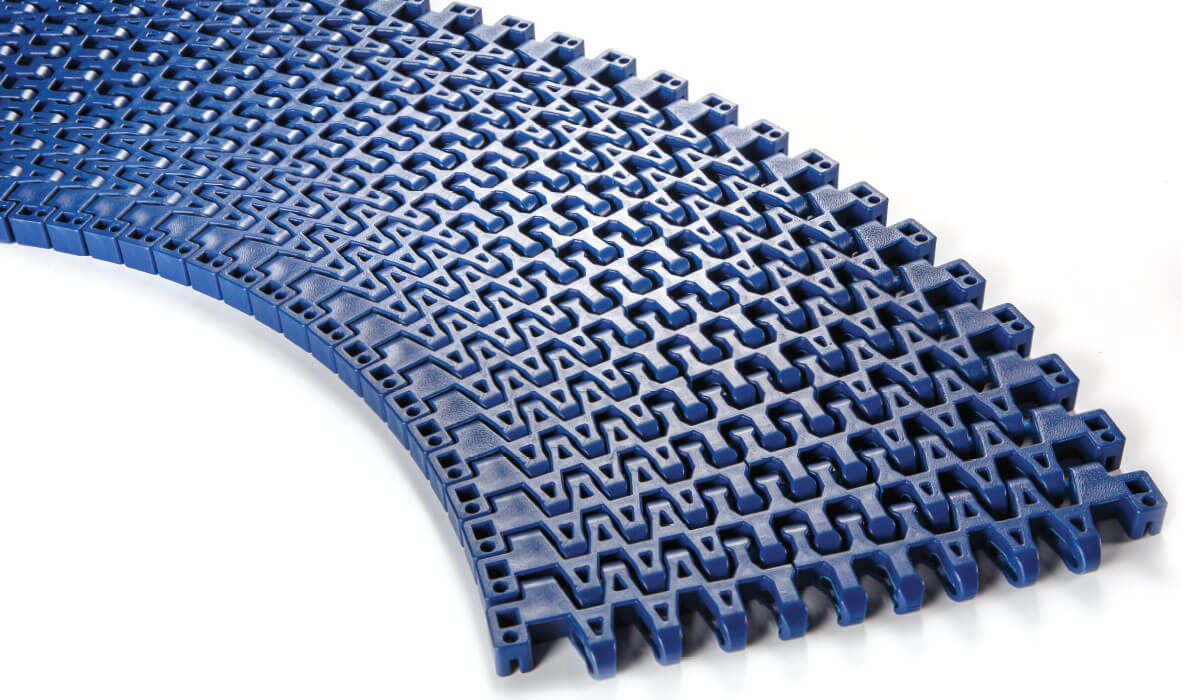
Can you explain the impact of temperature and chemical exposure on the performance of modular belts?
The performance of modular belts can be significantly affected by temperature and chemical exposure. Here’s an explanation of how these factors impact the performance of modular belts:
- Temperature Exposure:
Extreme temperatures can have both immediate and long-term effects on the performance of modular belts. High temperatures can cause the belt material to soften, warp, or deform, leading to a loss of shape and functionality. This can result in increased friction, reduced belt life, and potential product damage. Conversely, low temperatures can make the belt material brittle and prone to cracking or breaking under stress. Temperature fluctuations can also affect the dimensional stability of modular belts, leading to issues such as belt elongation or contraction, misalignment, or increased wear.
To mitigate the impact of temperature exposure, modular belts are available in various temperature-resistant materials. Specialized belts with high-temperature resistance can withstand elevated temperatures without deforming or losing their structural integrity. These belts are often used in applications such as baking or heat-sealing processes. Similarly, belts with low-temperature resistance are designed to remain flexible and durable in cold environments, such as freezer or refrigeration applications. Using modular belts appropriate for the temperature conditions helps maintain optimal performance and prolongs the belt’s lifespan.
- Chemical Exposure:
Chemical exposure can also have a significant impact on the performance of modular belts. Different chemicals can react with the belt material, causing degradation, swelling, or discoloration. Harsh chemicals or cleaning agents can weaken the belt structure, leading to reduced tensile strength, increased brittleness, or loss of flexibility. Chemical exposure can also affect the surface properties of the belt, such as its friction coefficient or release characteristics, potentially impacting product handling and transfer efficiency.
To address the impact of chemical exposure, modular belts are available in chemically resistant materials. These materials are specifically formulated to withstand exposure to various chemicals commonly found in industrial environments. They are designed to resist chemical attack, prevent material degradation, and maintain the integrity of the belt. Using chemically resistant modular belts is crucial in industries where aggressive chemicals are present, such as pharmaceuticals, chemical processing, or automotive manufacturing.
It’s important to note that while modular belts are designed to withstand certain levels of temperature and chemical exposure, there are limits to their resistance. Excessive or prolonged exposure to extreme temperatures or highly corrosive chemicals can still cause damage or premature wear. Therefore, it’s essential to select the appropriate modular belt material based on the specific temperature and chemical conditions of the application, and to follow the manufacturer’s guidelines for temperature and chemical compatibility.
In summary, temperature and chemical exposure can significantly impact the performance of modular belts. Extreme temperatures can cause deformation, dimensional changes, or loss of belt integrity, while chemical exposure can lead to material degradation and reduced belt strength. By using temperature-resistant and chemically resistant modular belts, it’s possible to mitigate these effects and ensure optimal performance and longevity in diverse industrial applications.
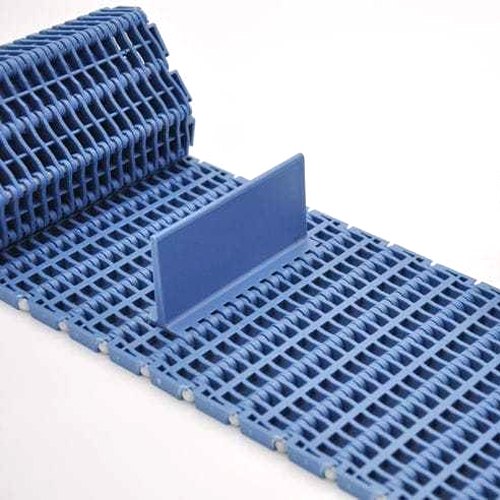
Can modular belts be customized for specific industries or conveyor configurations?
Yes, modular belts can be customized to meet the specific requirements of different industries or conveyor configurations. The modular design of these belts allows for flexibility in tailoring them to specific applications, ensuring optimal performance and functionality. Here are some ways in which modular belts can be customized:
- Material Selection:
Modular belts can be customized by selecting the appropriate materials based on the industry or application requirements. Different industries have specific material handling needs, such as food processing, pharmaceuticals, automotive, or electronics. For example, in food processing, modular belts made of FDA-approved materials that are resistant to chemicals and easy to clean are often used. In industries where high temperatures or abrasive materials are present, modular belts with heat-resistant or wear-resistant materials can be selected. By choosing the right material, the belt can be customized to withstand the demands of the specific industry.
- Module Design:
The design of individual modules can be customized to enhance the performance of the modular belt. Modules come in various shapes, sizes, and surface textures to accommodate different product characteristics and conveyor requirements. For example, modules with cleats or flights can be added to provide better grip and prevent product slippage on inclined or declined conveyors. Modules with rollers or ball transfers can facilitate smoother product transfers between conveyors. By selecting or customizing the module design, the modular belt can be tailored to specific product handling needs and conveyor configurations.
- Accessories and Features:
Modular belts can be customized with accessories and features to enhance their functionality in specific industries or conveyor configurations. Accessories such as side guards, guide rails, or diverts can be added to ensure proper product orientation and containment. Additionally, specialized features like low back-pressure accumulation systems or indexing modules can be integrated into the belt to meet specific operational requirements. These customized accessories and features enable the modular belt to adapt to unique industry needs and conveyor system configurations.
- Size and Dimensions:
The size and dimensions of modular belts can be customized to fit specific conveyor configurations. The individual modules can be easily cut or extended to achieve the desired length of the belt. Additional modules can be added or removed to adjust the width of the belt according to the available space or product handling requirements. This customization allows the modular belt to seamlessly integrate into existing conveyor systems or be tailored to fit unique conveyor layouts.
- Specialized Belting Solutions:
Some modular belt manufacturers offer specialized belting solutions for specific industries or applications. These customized solutions are designed to address the unique challenges and requirements of particular industries, such as meat and poultry processing, baking, or automotive manufacturing. They may include features like antimicrobial coatings, high-temperature resistance, or specialized surface textures. These specialized belting solutions ensure that the modular belt is optimized for the specific industry or application, providing reliable and efficient performance.
In summary, modular belts can be customized for specific industries or conveyor configurations through material selection, module design, accessories and features, size and dimensions, and specialized belting solutions. This customization allows the modular belt to meet the unique needs of different industries and ensure optimal performance and functionality in diverse conveyor system applications.
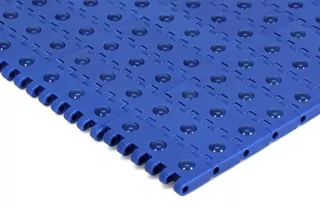
How do modular belts differ from traditional conveyor belts in terms of design and functionality?
In terms of design and functionality, modular belts differ from traditional conveyor belts in several key ways. These differences contribute to the unique advantages and capabilities of modular belts in industrial applications. Here’s a detailed comparison:
- Design:
Traditional conveyor belts are typically made of a continuous loop of material, such as rubber or fabric, that is stretched over a series of rollers. In contrast, modular belts are composed of individual interlocking modules or links. Each module has built-in hinges or connecting rods that allow for easy assembly and disassembly. The modules are usually flat or slightly curved, and they can be customized with various surface patterns, textures, or accessories to meet specific application requirements.
- Flexibility:
Modular belts offer greater flexibility compared to traditional conveyor belts. The modular design allows for easy configuration and customization of the belt’s width, length, and layout. The interlocking modules can be added, removed, or repositioned as needed, enabling the creation of conveyor systems of different sizes and shapes. This flexibility makes modular belts adaptable to changing production processes or facility layouts, whereas traditional conveyor belts are relatively fixed in their dimensions and configurations.
- Load Distribution:
Modular belts distribute the load more evenly compared to traditional conveyor belts. The interlocking modules share the weight of the transported goods, reducing stress on individual components and enhancing the belt’s durability. In traditional conveyor belts, the load is concentrated on the belt’s surface, which can lead to uneven wear and potential damage. The load distribution capability of modular belts allows them to handle a wide range of loads, from lightweight packages to heavy bulk materials, with improved performance and longevity.
- Maintenance and Repair:
Maintenance and repair of modular belts are generally easier compared to traditional conveyor belts. If a module gets damaged or worn out, it can be replaced individually without the need to replace the entire belt. This modular replacement approach reduces downtime and maintenance costs. In contrast, repairing traditional conveyor belts often involves replacing a larger section or the entire belt, which can be more time-consuming and costly. Additionally, modular belts have a smooth and non-porous surface, making them easier to clean and resistant to debris or contaminants, enhancing hygiene and reducing maintenance requirements.
- Accumulation and Sorting:
Modular belts excel in accumulation and sorting applications. The interlocking modules create a flat and even surface that allows products to accumulate without interference. This feature is beneficial in assembly lines or distribution centers where items need to be temporarily stored or grouped before further processing or sorting. Traditional conveyor belts, on the other hand, may not provide the same level of product stability and accumulation capabilities.
- Tracking and Alignment:
Modular belts have excellent tracking and alignment characteristics. The interlocking modules ensure that the belt remains flat and stable during operation, minimizing the risk of tracking issues or belt misalignment. This accurate tracking improves overall system efficiency, reduces product spillage, and extends the life of the belt and other conveyor components. Traditional conveyor belts may require additional mechanisms or adjustments to maintain proper tracking and alignment.
- Specialized Applications:
Modular belts are suitable for a wide range of specialized applications. Their versatility and customizable design make them adaptable to specific material handling needs. For example, modular belts can withstand high temperatures, making them suitable for baking or heat-treatment applications where traditional belts may not be suitable. They can also be customized to provide tight transfers or small product gaps, which is beneficial in industries such as packaging. Traditional conveyor belts may not offer the same level of customization or specialized capabilities.
In summary, modular belts differ from traditional conveyor belts in terms of their design and functionality. The modular design and flexibility of modular belts allow for easy configuration, customization, and maintenance. They offer advantages such as improved load distribution, accurate tracking, and suitability for specialized applications. These differences contribute to the unique capabilities and benefits of modular belts in industrial settings.


editor by CX 2024-02-08