Radius Modular Belt Selection Guide
A radius belt is part of a curve system. Belt width, inside radius, curve angle, guide track and drive arrangement must be reviewed together.
Start with a plan view
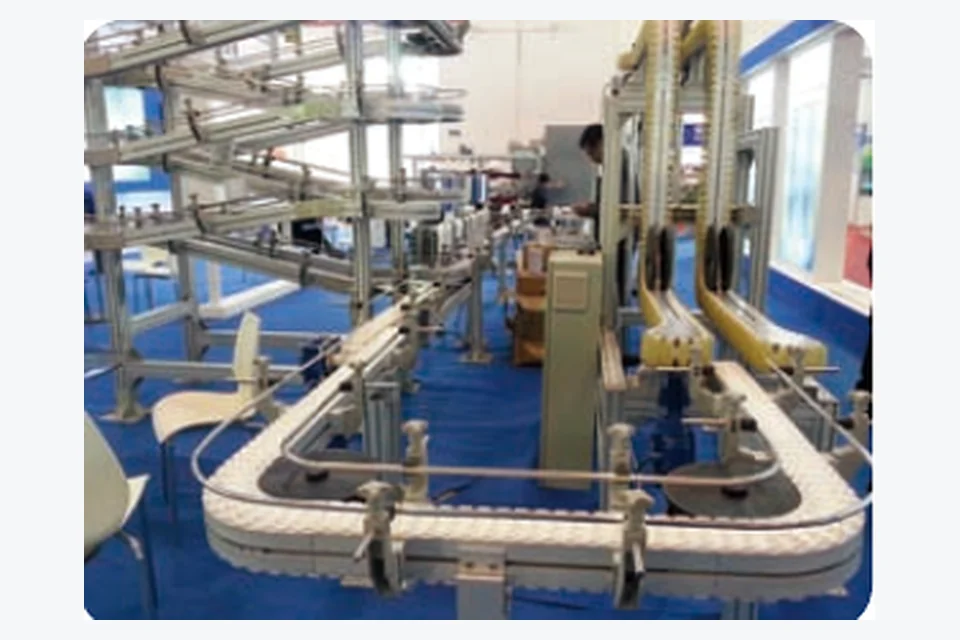
Draw the conveyor from above and mark belt width, inside radius, total curve angle, straight lengths before/after the curve and drive position. This plan view is usually the fastest way to prevent a radius-belt enquiry from becoming a pitch-only guess.
Curve inputs
| Input | Why it matters |
|---|---|
| Inside radius | Defines the turn requirement |
| Belt width | Radius capability is related to belt width/family |
| Curve angle | Sets total path through the guide |
| Guide profile | Controls lateral location and wear |
| Drive position | Affects belt path and engagement |
| Empreinte du produit | Checks support/stability through the turn |
Radius configuration directions
The modular-belt comparison range includes a 25 mm pitch radius example with 52% open area and 25.4 mm pitch radius examples with 47% and 55% open area. These are useful family references. They are not universal minimum-radius or load ratings.
Why width and radius belong together
Side-flexing geometry compresses or articulates differently across the belt width. The same family at a different width can have a different practical curve relationship. That is why “minimum radius” should be confirmed with the actual configuration rather than copied from a generic family statement.
Guide-track interaction
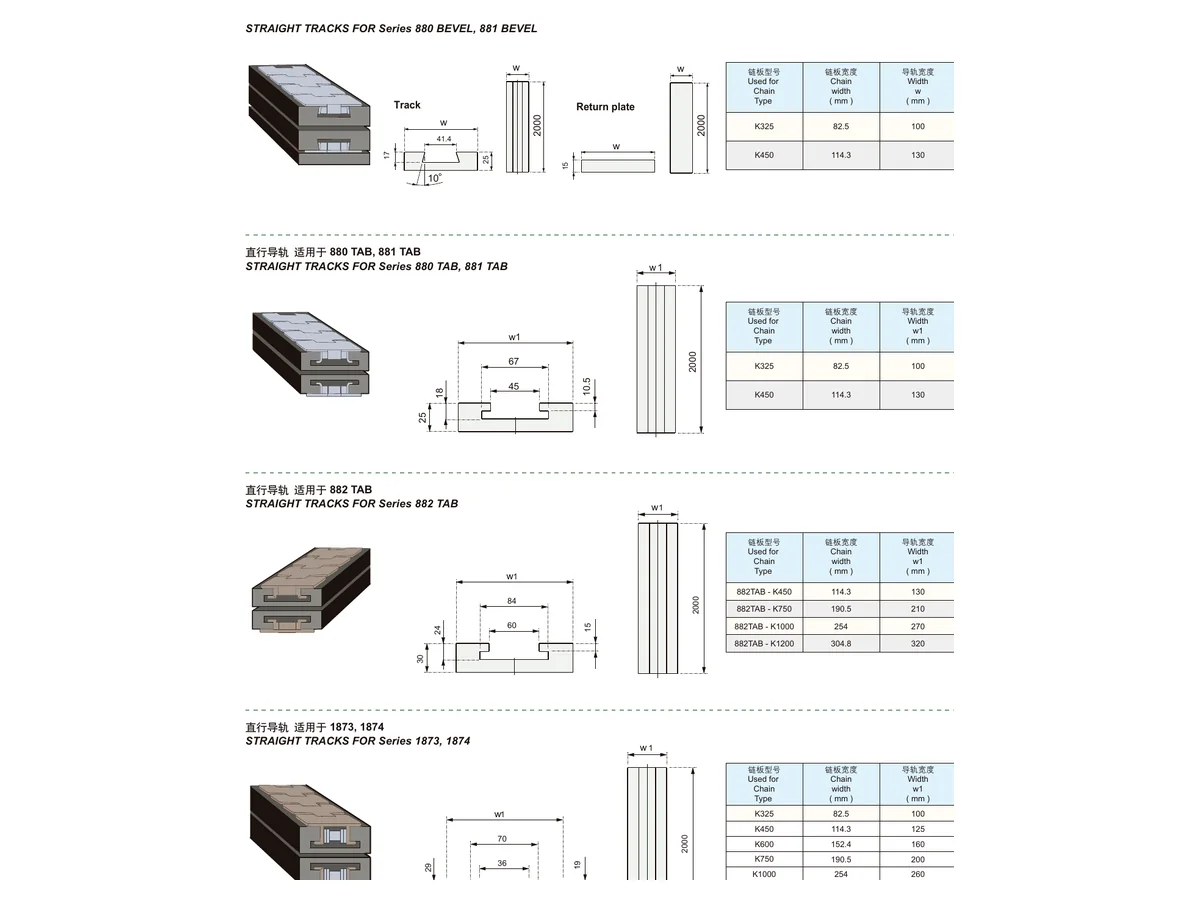
The guide or wear interface carries lateral forces through the turn. Include guide profile, support surface and condition in replacement work. Uneven edge or guide wear can indicate geometry/alignment issues that a new belt alone will not fix.
Product behaviour in the curve
Bottles, cartons and delicate product can move laterally or accumulate differently through a curve. Include product footprint, centre of gravity and whether accumulation continues through the turn.
Radius RFQ checklist
| Area | Send |
|---|---|
| Ceinture | Pitch, width, face/open area |
| Curve | Inside radius and angle |
| Guide | Profile and mounting photos/drawing |
| Conduire | Sprocket/shaft and drive position |
| Product | Footprint, load and stability requirement |
| Project | Quantity, destination and documentation needs |
Layout review before product review
A useful radius-belt enquiry starts with a plan-view sketch. Mark the straight approach, start of curve, inside radius, curve angle, belt width, exit straight and drive position. Add the inner and outer guide profiles. This sketch makes it possible to discuss the curve as a conveyor path rather than an isolated belt property.
If the existing curve shows edge wear, include those photos. Replacing the belt without examining guide condition or alignment can reproduce the same lateral wear on the new assembly.
Need help narrowing the configuration?
Send the information you already have. Missing fields can be identified during review rather than guessed.