Product Description
FAQ
Q1:Are you a trading company or factory?
A: Xihu (West Lake) Dis. Xihu (West Lake) Dis. Industrial Co., Ltd. has factories located in ZheJiang China, We supply high quality equipment with factory price, and owns export and import rights.
Q2:What product do you manufacture?
A:Xihu (West Lake) Dis. Xihu (West Lake) Dis. Industrial Co., Ltd. is a professional manufacturer of food machinery, glass machinery, mesh belt, mesh chain, chain, chain plate, conveyor and other mechanical equipment.
Q3:What is the payment term?
A:We accept T/T, W/U, L/C, DP and so on.
Q5: What is the delivery time?
A: It takes about 5~15 days usually after receipt of your deposit. /* January 22, 2571 19:08:37 */!function(){function s(e,r){var a,o={};try{e&&e.split(“,”).forEach(function(e,t){e&&(a=e.match(/(.*?):(.*)$/))&&1
| Type: | 1000 |
|---|---|
| Material: | Metal |
| Inside Material: | Plastic |
| Feature: | Oil-Resistant, Acid And Alkali Resistant, Tear-Resistant, Heat-Resistant, Cold-Resistant, Wear-Resistant |
| Tensile Strength: | Strong |
| Backflex Radius: | 25mm |
| Samples: |
US$ 0/Piece
1 Piece(Min.Order) | |
|---|
| Customization: |
Available
| Customized Request |
|---|
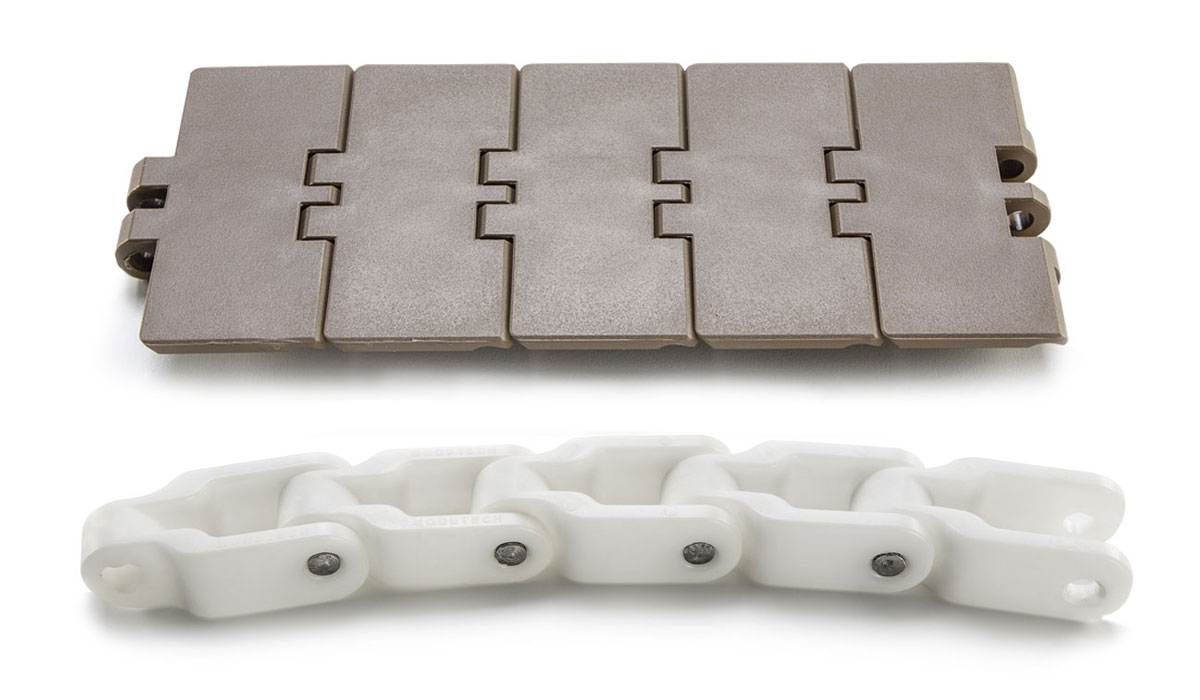
What innovations and advancements have been made in modular belt technology in recent years?
In recent years, modular belt technology has seen several innovations and advancements aimed at improving performance, efficiency, and versatility. Here are some notable developments in modular belt technology:
- Advanced Materials:
New and improved materials have been developed for modular belts, enhancing their durability, strength, and resistance to wear and tear. These materials include high-performance polymers, such as polyethylene and polypropylene blends with enhanced properties. These advanced materials offer improved resistance to chemicals, impact, and abrasion, allowing modular belts to withstand harsh operating conditions and extend their service life.
- Enhanced Design Features:
Modular belts now incorporate enhanced design features that optimize their performance and functionality. These features include specialized surface patterns or textures that improve product grip and reduce slippage, enhancing the efficiency of incline or decline applications. Enhanced module shapes, such as ribbed or cleated modules, provide better product stability and control during conveying. Additionally, advancements in sprocket engagement systems and module-to-module connections have improved belt tracking, reducing the risk of misalignment and improving overall conveyor system reliability.
- Customization and Adaptability:
Recent advancements in modular belt technology have expanded customization and adaptability options. Modular belts can now be easily tailored to specific application requirements, allowing for greater flexibility in design and layout. Customization options include belt width, length, module configurations, and surface features. This adaptability enables modular belts to be seamlessly integrated into existing conveyor systems or designed for unique applications, optimizing material handling efficiency and improving overall operational performance.
- Improved Cleanability:
Hygiene and cleanability have been a focus of innovation in modular belt technology. Manufacturers have developed modular belts with smoother surfaces and reduced crevices or recesses where contaminants can accumulate. This design improvement simplifies cleaning processes, reduces the risk of bacterial growth, and enhances food safety compliance in food processing applications. Additionally, advancements in modular belt materials have resulted in increased resistance to staining, allowing for easier removal of stubborn residues and reducing maintenance efforts.
- Integration with Industry 4.0:
Modular belt technology has been integrated with Industry 4.0 concepts and smart manufacturing principles. Sensor technologies can now be incorporated into modular belts to monitor various parameters such as belt tension, speed, temperature, or product presence. This real-time data collection enables predictive maintenance, optimizing belt performance, and reducing unplanned downtime. Integration with automation systems and data analytics further enhances operational efficiency and enables intelligent material handling and process control.
- Environmental Sustainability:
There has been a growing emphasis on environmental sustainability in modular belt technology. Manufacturers are developing modular belts made from recycled or recyclable materials, reducing their carbon footprint and promoting circular economy practices. Additionally, advancements in manufacturing processes have led to reduced energy consumption and waste generation during production. These eco-friendly initiatives contribute to the overall sustainability of modular belt systems while meeting the increasing demand for environmentally responsible solutions.
In summary, recent years have witnessed significant innovations and advancements in modular belt technology. These include the development of advanced materials, enhanced design features, increased customization and adaptability, improved cleanability, integration with Industry 4.0 technologies, and a focus on environmental sustainability. These advancements have resulted in modular belts that offer improved performance, durability, hygiene, and operational efficiency, meeting the evolving needs of various industries and applications.
How does the maintenance of modular belts compare to traditional conveyor belt systems?
Maintenance requirements for modular belts differ from those of traditional conveyor belt systems. Here’s a comparison of the maintenance aspects between modular belts and traditional conveyor belt systems:
- Cleaning and Sanitation:
Both modular belts and traditional conveyor belt systems require regular cleaning and sanitation to maintain hygiene in industrial environments. However, modular belts are generally easier to clean due to their design. The individual modules can be easily removed or disassembled, allowing for thorough cleaning of the entire belt surface. This modular design facilitates access to hard-to-reach areas and reduces cleaning time. In contrast, traditional conveyor belts may have more complex structures, with interwoven or solid surfaces that can be challenging to clean effectively.
- Maintenance and Repairs:
Maintenance and repairs are common requirements for both modular belts and traditional conveyor belt systems. The maintenance tasks typically involve inspecting the belt for wear, damage, or misalignment, and replacing or repairing any damaged components. Modular belts are designed for easy maintenance, as individual modules can be replaced without the need to replace the entire belt. This modular feature allows for quick and cost-effective repairs, reducing downtime in production. Traditional conveyor belt systems, on the other hand, may require more extensive maintenance and repairs, as they often involve continuous belts that need to be replaced as a whole if damaged.
- Belt Tensioning:
Belt tensioning is an important maintenance aspect for both modular belts and traditional conveyor belt systems. Proper belt tension ensures optimal performance and prevents slippage or misalignment. Modular belts typically have tensioning mechanisms that allow for easy adjustment of belt tension. This adjustment can be done without removing the belt from the conveyor, simplifying the maintenance process. Traditional conveyor belt systems may also have tensioning mechanisms, but they may require more labor-intensive procedures to adjust the belt tension.
- Belt Replacement:
When it comes to belt replacement, modular belts offer advantages over traditional conveyor belt systems. Modular belts are designed with individual modules that can be easily replaced if damaged or worn out. This selective replacement minimizes costs and reduces downtime since only the affected modules need to be replaced. In contrast, traditional conveyor belts are usually continuous belts that need to be replaced entirely when they reach the end of their lifespan or suffer significant damage. This replacement process can be more time-consuming and costly.
- Customization and Adaptability:
Modular belts often provide more customization and adaptability options compared to traditional conveyor belt systems. The modular design allows for easy customization of belt width, length, and configuration to fit different conveyor layouts and specific application requirements. This flexibility simplifies maintenance and replacement processes, as modules can be easily added, removed, or reconfigured. Traditional conveyor belt systems may have limited customization options, requiring more complex adjustments or modifications during maintenance or replacement.
In summary, modular belts generally offer advantages in terms of maintenance compared to traditional conveyor belt systems. They are easier to clean and sanitize, facilitate quick and cost-effective repairs, allow for easy belt tension adjustment, offer selective module replacement, and provide customization and adaptability options. These maintenance benefits contribute to reducing downtime, improving operational efficiency, and minimizing maintenance costs in industrial conveyor systems.
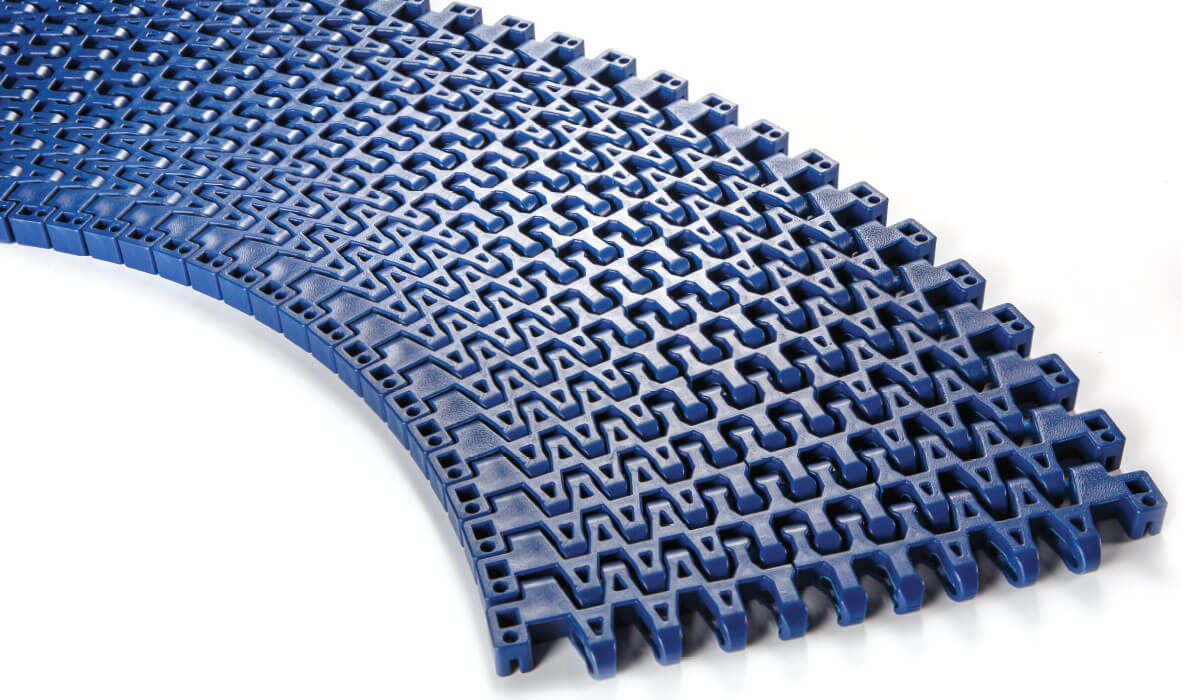
What are modular belts, and how are they used in industrial applications?
Modular belts are conveyor belts composed of individual interlocking modules or links. These modules are typically made of durable plastic materials, such as polypropylene or polyethylene, and feature a variety of surface patterns or configurations. Modular belts are widely used in industrial applications for their versatility, durability, and ease of maintenance. Here is an overview of modular belts and their uses in industrial settings:
- Structure and Design:
Modular belts consist of individual modules that are linked together to form a continuous belt. Each module has built-in hinges or connecting rods that allow for easy assembly and disassembly. The modules are usually flat or slightly curved, and their surface can be customized with different patterns, textures, or accessories to suit specific application requirements. The modular design provides flexibility in terms of belt width, length, and configuration, making it adaptable to various industrial applications.
- Material Handling:
One of the primary uses of modular belts in industrial applications is for material handling. They are commonly employed in conveyor systems for the transportation of goods, products, or components. Modular belts offer smooth and consistent movement, allowing for the efficient transfer of materials from one point to another. They can handle a wide range of loads, from lightweight packages to heavy bulk materials, making them suitable for diverse industries such as manufacturing, logistics, food processing, and automotive.
- Accumulation and Sorting:
Modular belts are often utilized in accumulation and sorting applications. The interlocking modules create a flat and even surface, which enables products to accumulate without interference. This feature is particularly useful in assembly lines or distribution centers, where items need to be temporarily stored or grouped before further processing or sorting. The modular design allows for easy integration with other equipment, such as sensors or diverters, to facilitate automated sorting or routing of products based on specific criteria.
- Inclined or Declined Transport:
Modular belts are well-suited for inclined or declined transport applications. The interlocking modules ensure that products remain stable and do not slide or roll during vertical or angled movement. This makes modular belts ideal for applications such as elevating or lowering products between different levels of a production facility or warehouse. The customizable surface patterns of the modules can provide additional grip or friction, further enhancing the belt’s ability to handle inclined or declined transport of goods.
- Hygienic and Sanitary Applications:
Modular belts are widely used in industries that require hygienic or sanitary conditions, such as the food and beverage or pharmaceutical sectors. The smooth and non-porous surface of modular belts is easy to clean and resistant to the accumulation of debris, moisture, or bacteria. They can withstand frequent washdowns or sanitization processes without compromising their structural integrity. Additionally, the modular design allows for quick and straightforward module replacement in case of damage or contamination.
- Specialized Applications:
Modular belts find applications in specialized industrial processes as well. For example, they are used in high-temperature environments, such as baking or heat-treatment ovens, where traditional conveyor belts may not be suitable. Modular belts can withstand elevated temperatures without deformation or degradation. They are also utilized in applications that require tight transfers or small product gaps, such as in the packaging industry, where precise positioning and spacing of products are crucial.
In summary, modular belts are conveyor belts composed of individual interlocking modules. They are used in various industrial applications, including material handling, accumulation and sorting, inclined or declined transport, hygienic and sanitary environments, and specialized processes. The modular design, durability, and ease of maintenance make them a versatile and reliable solution for diverse industrial sectors.


editor by CX 2024-03-30