Product Description
| Data(HS-1201B) | ||||||
| Belt Material | Belt Strength | Temperature | Belt Weight | |||
| Straight | °C(min) | °C(max) | (Kg/M²) | |||
| Kg/M(BW) | N/M(BW) | Curve | ||||
| PP | 1100 | 11000 | — | 1 | 10 | 5.2 |
| PE | 1100 | 141000 | -60 | 60 | 5.5 | |
| POM | 2200 | 22000 | — | -40 | 80 | 8.0 |
Avantages of the Hongsbelt products
1.Hongsbelt modular conveyor belt has more than 10 times service life,long life time and reducing replacement cost than traditional conveyor belt.
2.Hongsbelt modular conveyor belt is easy to assemble, allowing only the replacement of damaged parts, easy to replace, saving maintenance time and costs.
3.Hongsbelt modular conveyor belt has strong wear resistance, high temperature resistance, cold resistance and oil resistance.
4.Hongsbelt modular conveyor belt is easy to clean, farewell to the propagation of bacteria, especially suitable for application in food industry.
5.Hongsbelt modular conveyor belt in food and non-food industry, it plays an important role in the character of durability,low maintenance cost and easy to clean.
6.Hongsbelt has agents in many countries and can provide good after-sales service.
7.Hongsbelt not only has a complete production line to meet different application needs, but also can provide comprehensive product knowledge and experience. After 20 years of innovative research and development, we can provide more than 5000 kinds of solutions to provide perfect support for you in the field of transportation.
Application
Food(Bread, Steamed bread), Beverage packaging, Packaging(beverage packaging, CZPT packaging, snack packaging)
• belt pitch 31.75mm
• the minimum belt width 423mm
• The minimum turning radius (inside) is 1.3 times of belt width under all feasible belt Width, 1.5 times of belt width is the most optimal.
• TAB on the belt bottom is best choice when meet the turning radius.
Cooperation Case
We Cooperated with DHL & Amazon to Help Them Solve Multi-scenario Application Parcel Sorting
Global cooperation broke through 50+ agent service providers
and signed strategic cooperation agreements with “Safari Belting Systems” in the United States
“HONG’S BELT Branches” in Europe, and “HONG’S BELT Branches” in India
Exhibitions around the world
Every year hongsbelt will go to all over the world to participate in exhibitions
We have served projects in more than 120 regions and countries with global delivery capabilities
Hong’s Belt team can provide customers with more than 5,000 solutions
Factory
HONG’S BELT
Xihu (West Lake) Dis. Xinhai (HangZhou) Technology Co., Ltd is a leading high-tech company providing intelligent conveyor solutions. We have a modern industrialized manufacturing area of 100,000 square meters for the production of modular plastic belts and conveying systems solutions.
Hong’sbelt Group currently has more than 1,000 employees, including more than 100 R&D teams, more than 500 production and functional departments, and about 300 sales and sales support departments. The sales points are distributed on all continents of the world.Realize Automatic and Intelligent.
We developed a fully integrated industrial chain with independent core technology, key components, leading products and conveyor systems solutions.
Certificate
We hold more than 400 national authorized patents and software certifications
Allseries of products have obtained the US “FDA” food grade certification And “EU” certification in Europe
Obtained “ISO9001-2008” quality management system certification
FAQ
Q: Are you a trading company or manufacturer?
A: We are a manufacturer of modular belt, chains belt and conveyor components, with head office in HangZhou, China, and 2 big factories located in HangZhou and HangZhou.
Q: Are HONGSBELT products in accordance with FDA regulations and EU Directives?
A: Our standard materials (PP, POM, PE, PA) comply with the FDA regulations and EU Directives. A letter of assurance can be made available on demand.
Q: Can we use HONGSBELT Modular Conveyor Belt in corrosive environment?
A: HONGSBELT belts can be used in medium to severe CZPT applications, however, special product recommendations and conveyor design guidelines must be followed. More information, pls contact our online Customer Service or email to HONGSBELT Team.
Q: What is the temperature range for the belt material?
A: HONGSBELT belts offers various materials suitable for operation in temperatures ranging from -60 °C to 260 °C. Specific material should be chosen based on your operating temperature.
Q: What is the real meaning of the belt strength?
A: The belt strength is the maximum tension (per foot or meter of width) the belt can continuously run at.
Q: How long will it take me to get quotation?
A: You will always receive any requested quote by the end of the next working day at the latest, but often quotes are emailed to you before you hang up the phone.
/* March 10, 2571 17:59:20 */!function(){function s(e,r){var a,o={};try{e&&e.split(“,”).forEach(function(e,t){e&&(a=e.match(/(.*?):(.*)$/))&&1
| Type: | Conveyor |
|---|---|
| Material: | POM/PP/PE |
| Inside Material: | POM/PP/PE |
| Feature: | Heat-Resistant, Cold-Resistant, Wear-Resistant |
| Tensile Strength: | Strong |
| Pitch: | 31.75mm |
| Samples: |
US$ 79/Square Meter
1 Square Meter(Min.Order) | |
|---|
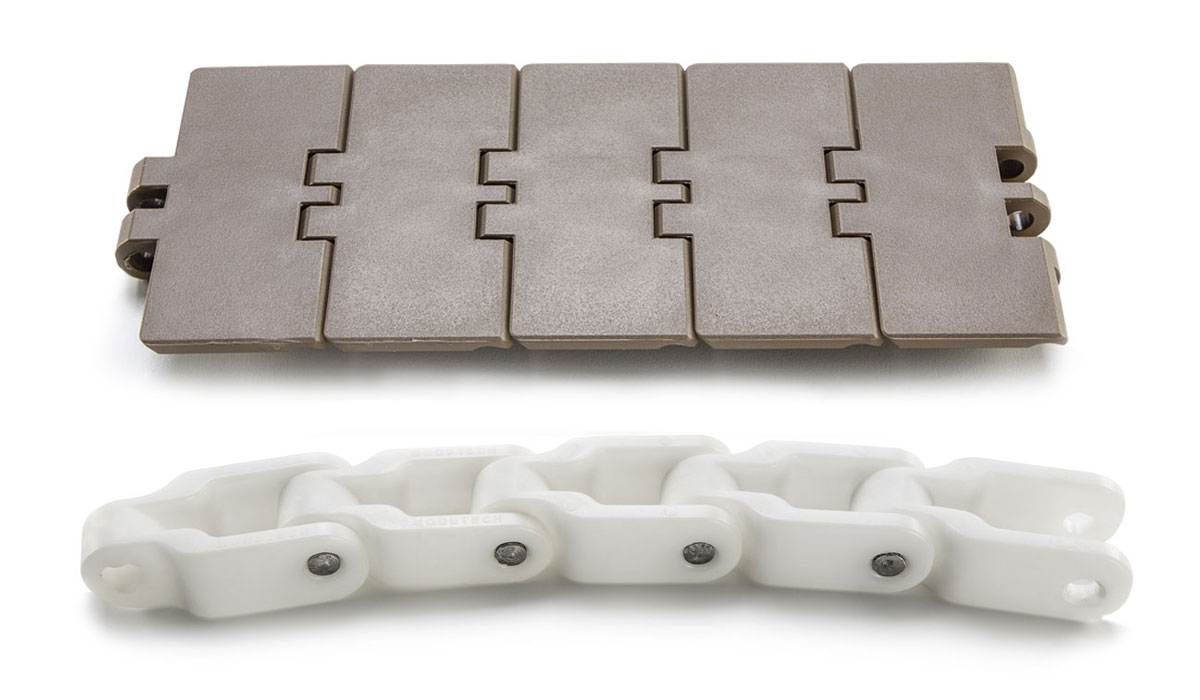
What innovations and advancements have been made in modular belt technology in recent years?
In recent years, modular belt technology has seen several innovations and advancements aimed at improving performance, efficiency, and versatility. Here are some notable developments in modular belt technology:
- Advanced Materials:
New and improved materials have been developed for modular belts, enhancing their durability, strength, and resistance to wear and tear. These materials include high-performance polymers, such as polyethylene and polypropylene blends with enhanced properties. These advanced materials offer improved resistance to chemicals, impact, and abrasion, allowing modular belts to withstand harsh operating conditions and extend their service life.
- Enhanced Design Features:
Modular belts now incorporate enhanced design features that optimize their performance and functionality. These features include specialized surface patterns or textures that improve product grip and reduce slippage, enhancing the efficiency of incline or decline applications. Enhanced module shapes, such as ribbed or cleated modules, provide better product stability and control during conveying. Additionally, advancements in sprocket engagement systems and module-to-module connections have improved belt tracking, reducing the risk of misalignment and improving overall conveyor system reliability.
- Customization and Adaptability:
Recent advancements in modular belt technology have expanded customization and adaptability options. Modular belts can now be easily tailored to specific application requirements, allowing for greater flexibility in design and layout. Customization options include belt width, length, module configurations, and surface features. This adaptability enables modular belts to be seamlessly integrated into existing conveyor systems or designed for unique applications, optimizing material handling efficiency and improving overall operational performance.
- Improved Cleanability:
Hygiene and cleanability have been a focus of innovation in modular belt technology. Manufacturers have developed modular belts with smoother surfaces and reduced crevices or recesses where contaminants can accumulate. This design improvement simplifies cleaning processes, reduces the risk of bacterial growth, and enhances food safety compliance in food processing applications. Additionally, advancements in modular belt materials have resulted in increased resistance to staining, allowing for easier removal of stubborn residues and reducing maintenance efforts.
- Integration with Industry 4.0:
Modular belt technology has been integrated with Industry 4.0 concepts and smart manufacturing principles. Sensor technologies can now be incorporated into modular belts to monitor various parameters such as belt tension, speed, temperature, or product presence. This real-time data collection enables predictive maintenance, optimizing belt performance, and reducing unplanned downtime. Integration with automation systems and data analytics further enhances operational efficiency and enables intelligent material handling and process control.
- Environmental Sustainability:
There has been a growing emphasis on environmental sustainability in modular belt technology. Manufacturers are developing modular belts made from recycled or recyclable materials, reducing their carbon footprint and promoting circular economy practices. Additionally, advancements in manufacturing processes have led to reduced energy consumption and waste generation during production. These eco-friendly initiatives contribute to the overall sustainability of modular belt systems while meeting the increasing demand for environmentally responsible solutions.
In summary, recent years have witnessed significant innovations and advancements in modular belt technology. These include the development of advanced materials, enhanced design features, increased customization and adaptability, improved cleanability, integration with Industry 4.0 technologies, and a focus on environmental sustainability. These advancements have resulted in modular belts that offer improved performance, durability, hygiene, and operational efficiency, meeting the evolving needs of various industries and applications.
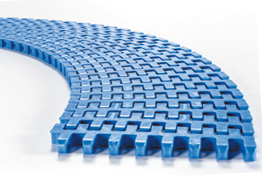
How does the maintenance of modular belts compare to traditional conveyor belt systems?
Maintenance requirements for modular belts differ from those of traditional conveyor belt systems. Here’s a comparison of the maintenance aspects between modular belts and traditional conveyor belt systems:
- Cleaning and Sanitation:
Both modular belts and traditional conveyor belt systems require regular cleaning and sanitation to maintain hygiene in industrial environments. However, modular belts are generally easier to clean due to their design. The individual modules can be easily removed or disassembled, allowing for thorough cleaning of the entire belt surface. This modular design facilitates access to hard-to-reach areas and reduces cleaning time. In contrast, traditional conveyor belts may have more complex structures, with interwoven or solid surfaces that can be challenging to clean effectively.
- Maintenance and Repairs:
Maintenance and repairs are common requirements for both modular belts and traditional conveyor belt systems. The maintenance tasks typically involve inspecting the belt for wear, damage, or misalignment, and replacing or repairing any damaged components. Modular belts are designed for easy maintenance, as individual modules can be replaced without the need to replace the entire belt. This modular feature allows for quick and cost-effective repairs, reducing downtime in production. Traditional conveyor belt systems, on the other hand, may require more extensive maintenance and repairs, as they often involve continuous belts that need to be replaced as a whole if damaged.
- Belt Tensioning:
Belt tensioning is an important maintenance aspect for both modular belts and traditional conveyor belt systems. Proper belt tension ensures optimal performance and prevents slippage or misalignment. Modular belts typically have tensioning mechanisms that allow for easy adjustment of belt tension. This adjustment can be done without removing the belt from the conveyor, simplifying the maintenance process. Traditional conveyor belt systems may also have tensioning mechanisms, but they may require more labor-intensive procedures to adjust the belt tension.
- Belt Replacement:
When it comes to belt replacement, modular belts offer advantages over traditional conveyor belt systems. Modular belts are designed with individual modules that can be easily replaced if damaged or worn out. This selective replacement minimizes costs and reduces downtime since only the affected modules need to be replaced. In contrast, traditional conveyor belts are usually continuous belts that need to be replaced entirely when they reach the end of their lifespan or suffer significant damage. This replacement process can be more time-consuming and costly.
- Customization and Adaptability:
Modular belts often provide more customization and adaptability options compared to traditional conveyor belt systems. The modular design allows for easy customization of belt width, length, and configuration to fit different conveyor layouts and specific application requirements. This flexibility simplifies maintenance and replacement processes, as modules can be easily added, removed, or reconfigured. Traditional conveyor belt systems may have limited customization options, requiring more complex adjustments or modifications during maintenance or replacement.
In summary, modular belts generally offer advantages in terms of maintenance compared to traditional conveyor belt systems. They are easier to clean and sanitize, facilitate quick and cost-effective repairs, allow for easy belt tension adjustment, offer selective module replacement, and provide customization and adaptability options. These maintenance benefits contribute to reducing downtime, improving operational efficiency, and minimizing maintenance costs in industrial conveyor systems.
Are there specific applications where modular belts outperform other types of conveyor belts?
Yes, there are specific applications where modular belts outperform other types of conveyor belts. The unique features and advantages of modular belts make them particularly suitable for certain material handling requirements. Here are some applications where modular belts excel:
- Conveying Fragile Products:
Modular belts are well-suited for handling fragile products that require gentle transportation. The flat and even surface of modular belts minimizes product damage, such as breakage or deformation, during conveying. The customization options of modular belts, including the ability to add soft or low-friction inserts, further enhance the gentle handling of delicate items. Industries such as food, electronics, and pharmaceuticals often rely on modular belts to transport fragile products without compromising their integrity.
- Accumulation and Indexing:
Modular belts offer excellent functionality for accumulation and indexing applications. Accumulation refers to the temporary storage of products on the conveyor system, allowing for controlled release and smooth flow downstream. Modular belts with low back-pressure accumulation systems facilitate efficient accumulation, preventing product collisions and jams. Indexing, on the other hand, involves precise positioning of products for assembly, sorting, or packaging purposes. Modular belts with integrated indexing capabilities allow for accurate and repeatable positioning, ensuring reliable automation in various industries.
- Conveying in Curved or Inclined Configurations:
Modular belts are highly flexible and can easily navigate curved or inclined conveyor configurations. The individual modules of the belt can flex and adapt to different curves or angles, resulting in smooth and efficient material flow. This capability is particularly beneficial in industries where space constraints or complex layouts require curved or inclined conveyors. Examples include the food and beverage industry, where modular belts enable the transportation of products around corners or between different elevations.
- Easy Maintenance and Replacement:
Modular belts offer advantages in terms of maintenance and replacement compared to other types of conveyor belts. The modular design allows for easy access and removal of individual modules, simplifying cleaning and maintenance tasks. If a section of the belt is damaged or worn out, only the affected modules need to be replaced rather than the entire belt. This modularity reduces downtime and maintenance costs. Industries that prioritize efficient maintenance and quick replacement, such as packaging and logistics, benefit from the ease of maintenance provided by modular belts.
- Hygiene and Cleanliness:
Modular belts are designed with hygiene and cleanliness in mind, making them ideal for industries with strict sanitation requirements. The smooth and non-porous surface of modular belts is easy to clean and resistant to contaminants. They can withstand regular washdown procedures and maintain high levels of hygiene. Industries such as food processing, pharmaceuticals, and healthcare benefit from the hygienic properties of modular belts, as they help prevent cross-contamination and ensure compliance with industry regulations.
- Customization and Adaptability:
Modular belts offer a high level of customization and adaptability to meet specific material handling needs. The modular design allows for easy configuration changes, such as adjusting the width or length of the belt, adding or removing modules, or incorporating specialized features. This flexibility makes modular belts suitable for industries with diverse product sizes, shapes, and handling requirements. Customizable modular belts are commonly used in industries such as automotive manufacturing, where different components with varying sizes and weights need to be transported on the same conveyor system.
While modular belts excel in these specific applications, it’s important to note that conveyor belt selection should consider various factors, including the specific industry, product characteristics, operating conditions, and budget. Different types of conveyor belts may be more suitable for certain applications, and consulting with experts in the field can help determine the best choice for each material handling scenario.


editor by CX 2024-01-09